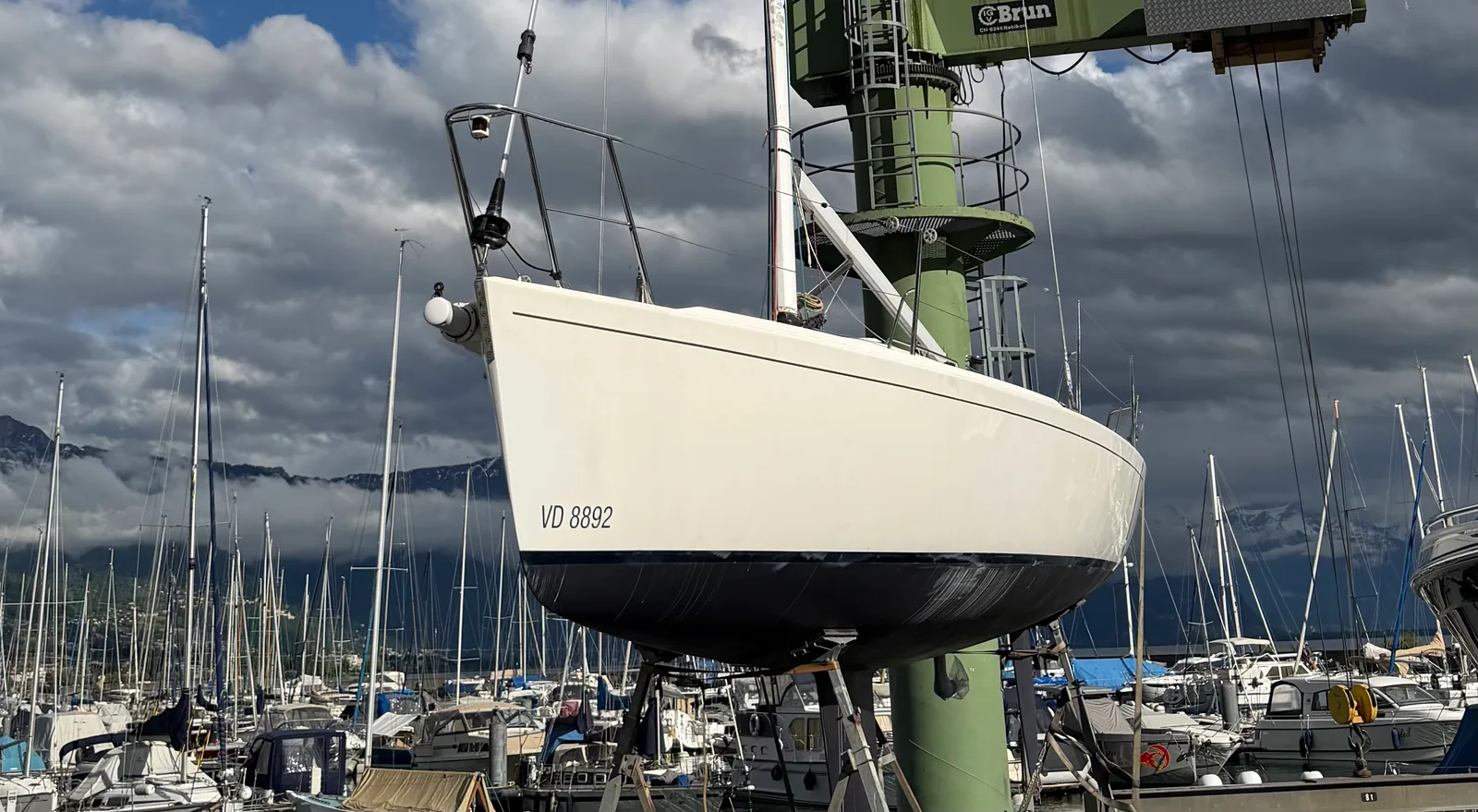
A good antifouling season starts under the paint: a hull faired back to a sound, even base, then a coating matched to the water it sails in. On Jamais, a 2007 J/92s at La Pichette on Lake Geneva, the boat came out of the water with an unknown antifouling history — so the season began with a clean start rather than another coat on top.
Starting from a sound base
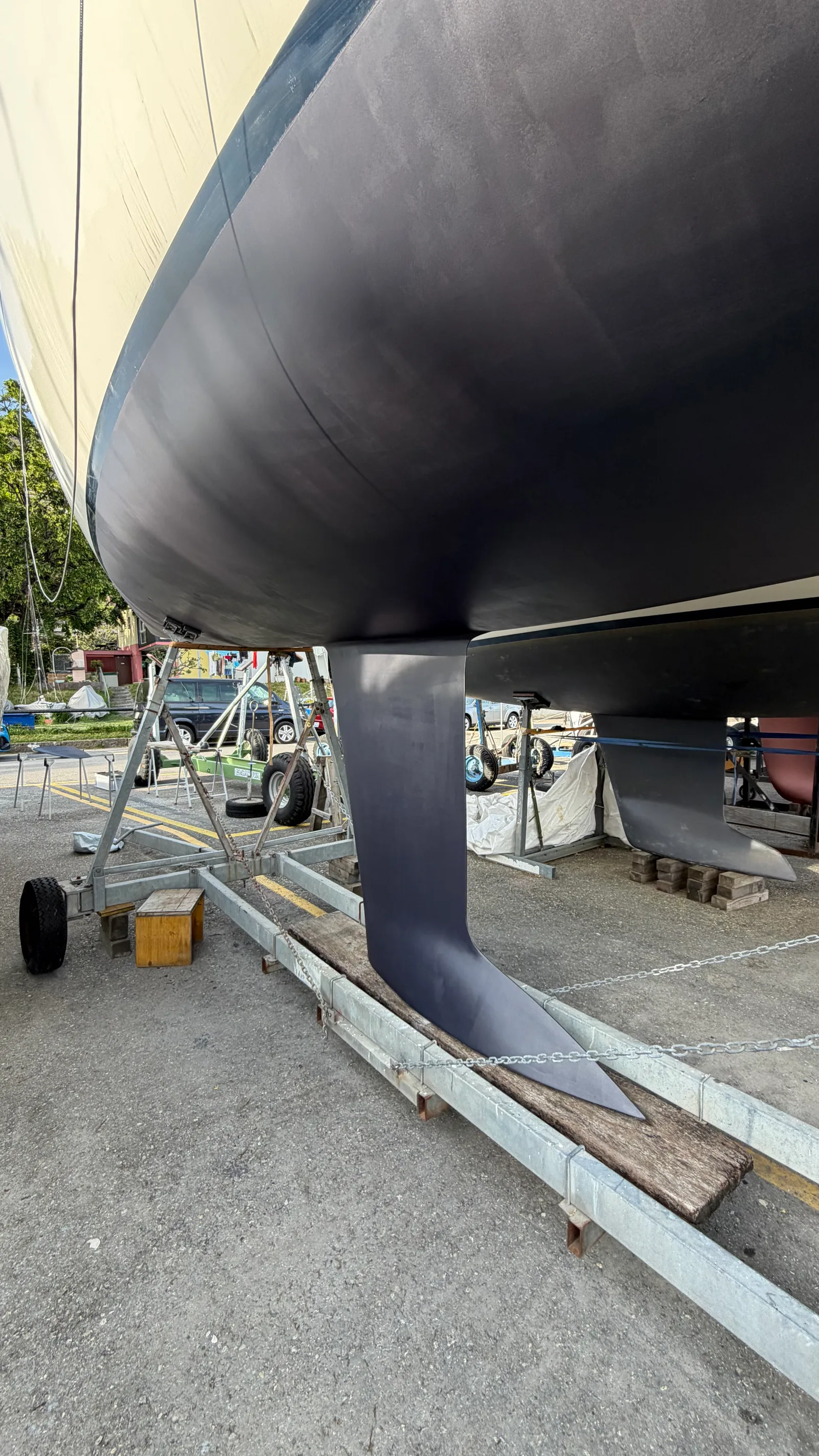
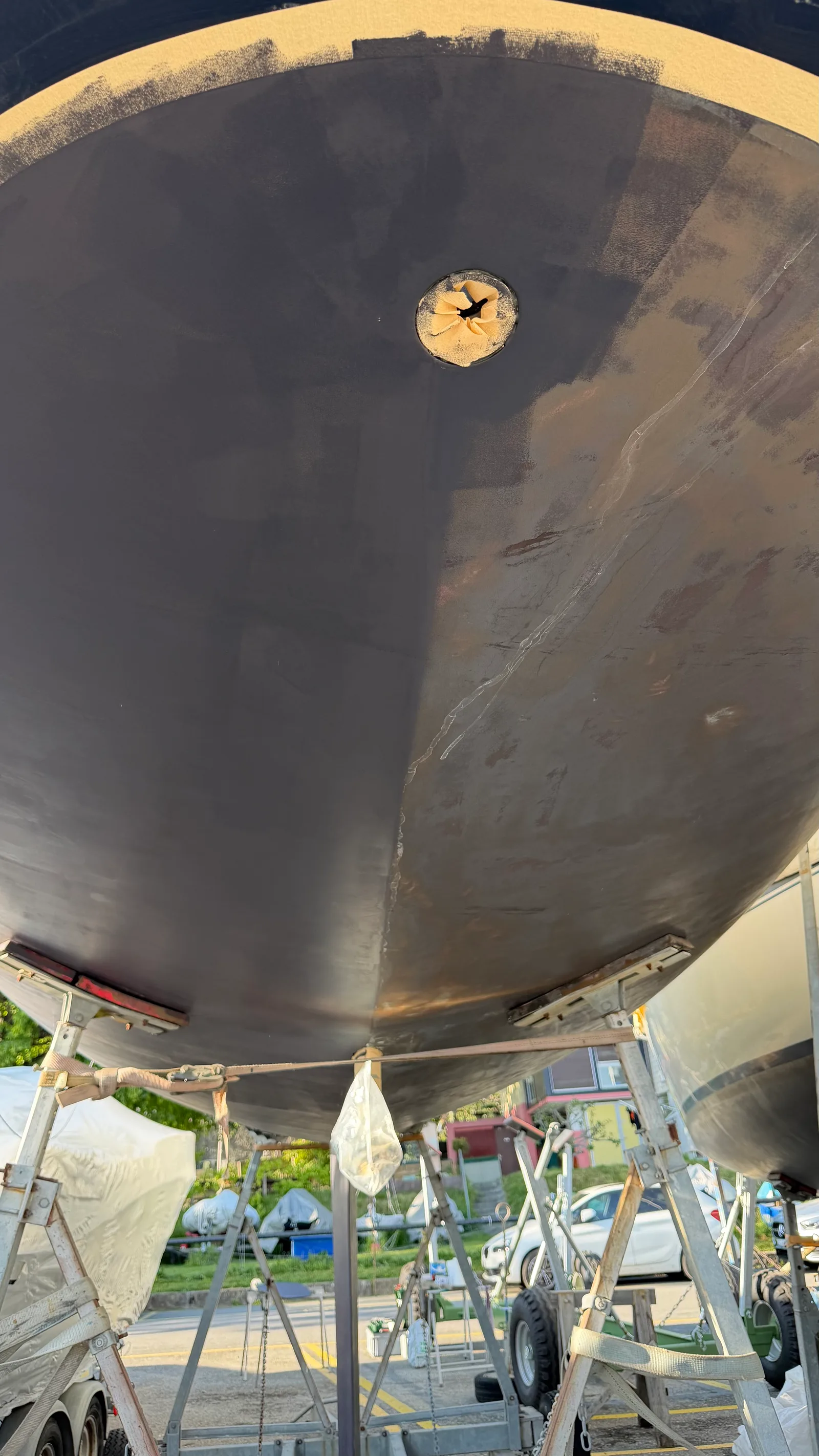
Antifouling is renewed roughly every year, and here the date of the last application was unknown. With the boat already ashore, the whole hull and the appendages — keel and rudder — were sanded back through several layers rather than simply overcoated.
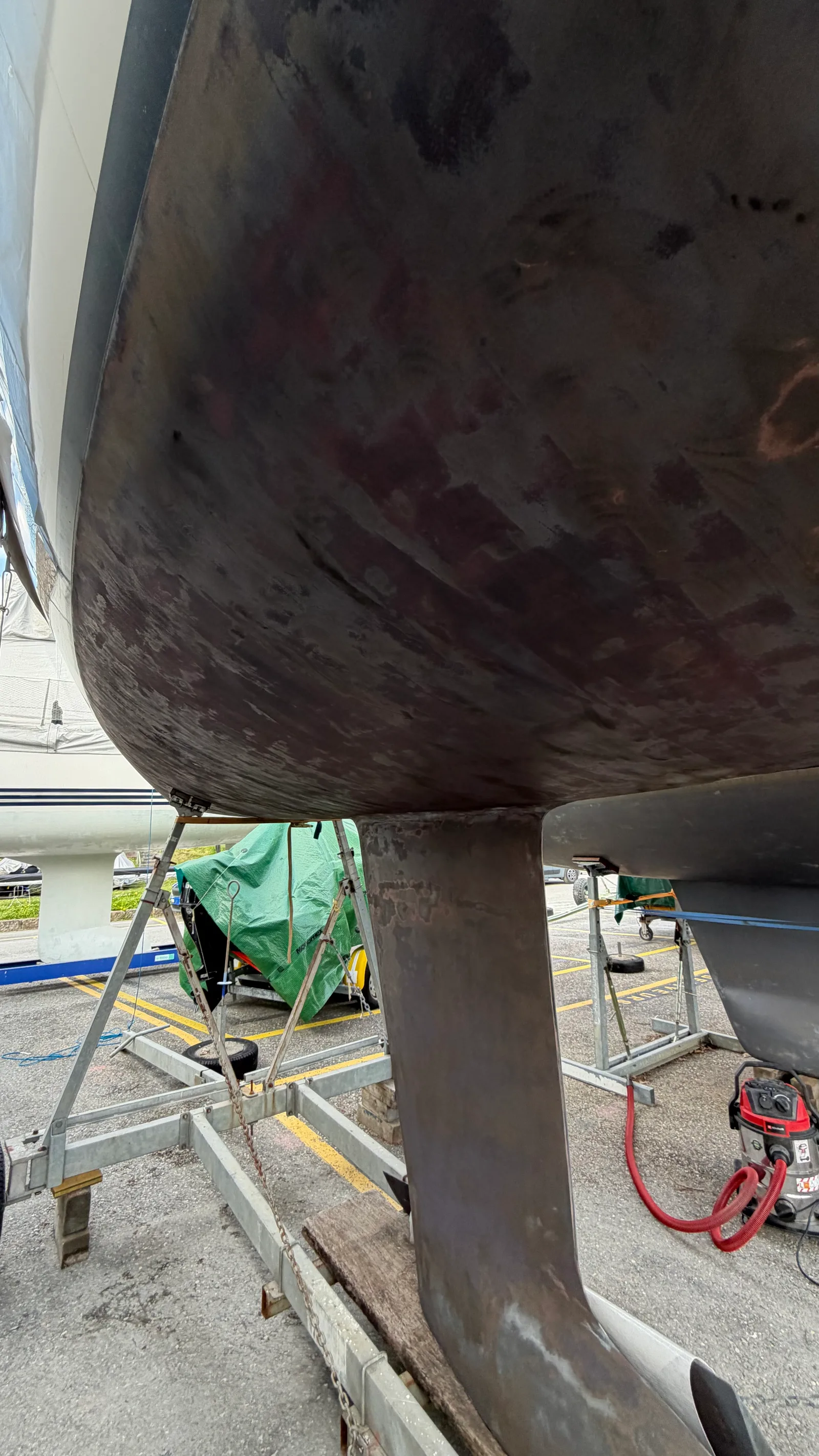
That sanding did three things. It got through the cracked old antifouling that would otherwise let fresh coats delaminate. It confirmed the cracks were only in the paint and not the hull — and they were: no damage below the waterline, the laminate sound. And it removed the small steps left by years of coats applied without proper sanding, so the base was even end to end. What every coat above depends on is exactly this: a sound, stable, even surface.
Choosing Thin Film Graphite, with the yard
The steer toward Thin Film came from Chantier Naval Casanova in Chardonne, above Vevey — the yard that also launched the boat — a confident recommendation for a lake racer.
The reasoning fits the water. The Léman is fresh water with moderate fouling pressure — mostly slime and light algae — so a hard, ultra-thin racing matrix suits it better than a thick, high-build coat. Thin Film Graphite is a hard, fine-matrix antifouling, homologated for Swiss and EU use in fresh and salt water, in a matte graphite finish. Its smooth, hard film gives a low-drag surface and, just as important on a boat maintained every season, it does not build up year on year.
Being a hard coating rather than a self-polishing one, it asks for a little in return: slime can still form, so an occasional wipe during the season is part of the deal. For freshwater racing that is a fair trade for a fast surface with no annual paint accumulation. It also sits with the practice common on Swiss lakes, where hard, low-build coatings are generally preferred over thick, copper-rich systems; a long-life epoxy-copper option like Coppercoat, and a conventional thick antifouling, were both weighed and set aside for this boat.
Application
With the surface prepared, the edges taped and everything cleaned, the paint was rolled on. Thin Film carries its graphite as a powder that settles under the lid, so it is stirred back into the paint before rolling — a hard antifouling only performs at the right film thickness. It dries fast and takes no sanding between coats, so the coats follow one another the same day.
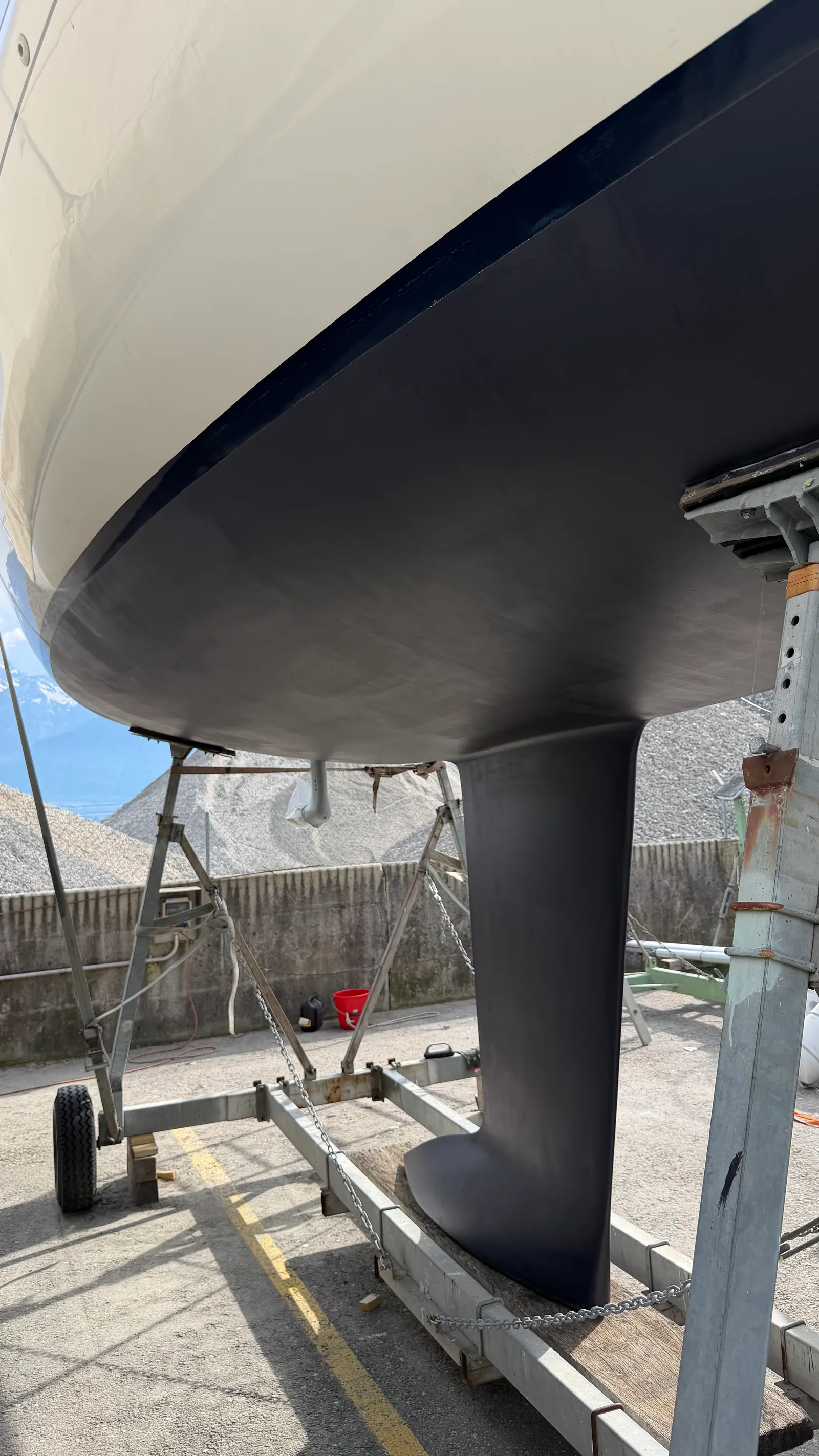
Three coats of Thin Film Graphite were applied to the hull and the appendages. The finish is smooth, matte and even — the racing surface the whole choice was about.
What maintenance looks like
The routine from one season to the next is light: a pressure-wash at haul-out, a light sand only where needed, one or two fresh coats to renew the film, and an occasional in-season wipe if slime forms. Because the coat is thin and hard, it doesn’t accumulate thickness — so there is no eventual strip-back to a bare hull waiting down the line.
FAQ
Why sand a hull back before antifouling?
To give the new coats a sound base. Sanding through cracked old antifouling stops fresh paint delaminating, lets you confirm the cracks are only in the paint and not the hull, and removes the steps left by years of coats — leaving an even surface.
Is Thin Film Graphite suitable for a freshwater lake?
Yes. It is homologated for Swiss and EU use in fresh and salt water, and its hard, low-drag film suits the Léman’s moderate fouling well, where a thick biocidal build isn’t needed.
How many coats of Thin Film are needed?
Two to three by roller for a season in the water; three were applied here, on the hull and appendages, for an even film and margin on the most exposed areas.
Does a hard antifouling need cleaning during the season?
It can. A hard, non-self-polishing coat may let some slime form, so an occasional underwater wipe keeps it clean — the trade for low drag and no annual build-up.
This job is part of Jamais’s logbook. See also the gelcoat repair of the bow and port topside and the propeller and Sail Drive refit.