
Hull 4 min read
Freshwater Sailboat Antifouling: Sanding to Thin Film Graphite
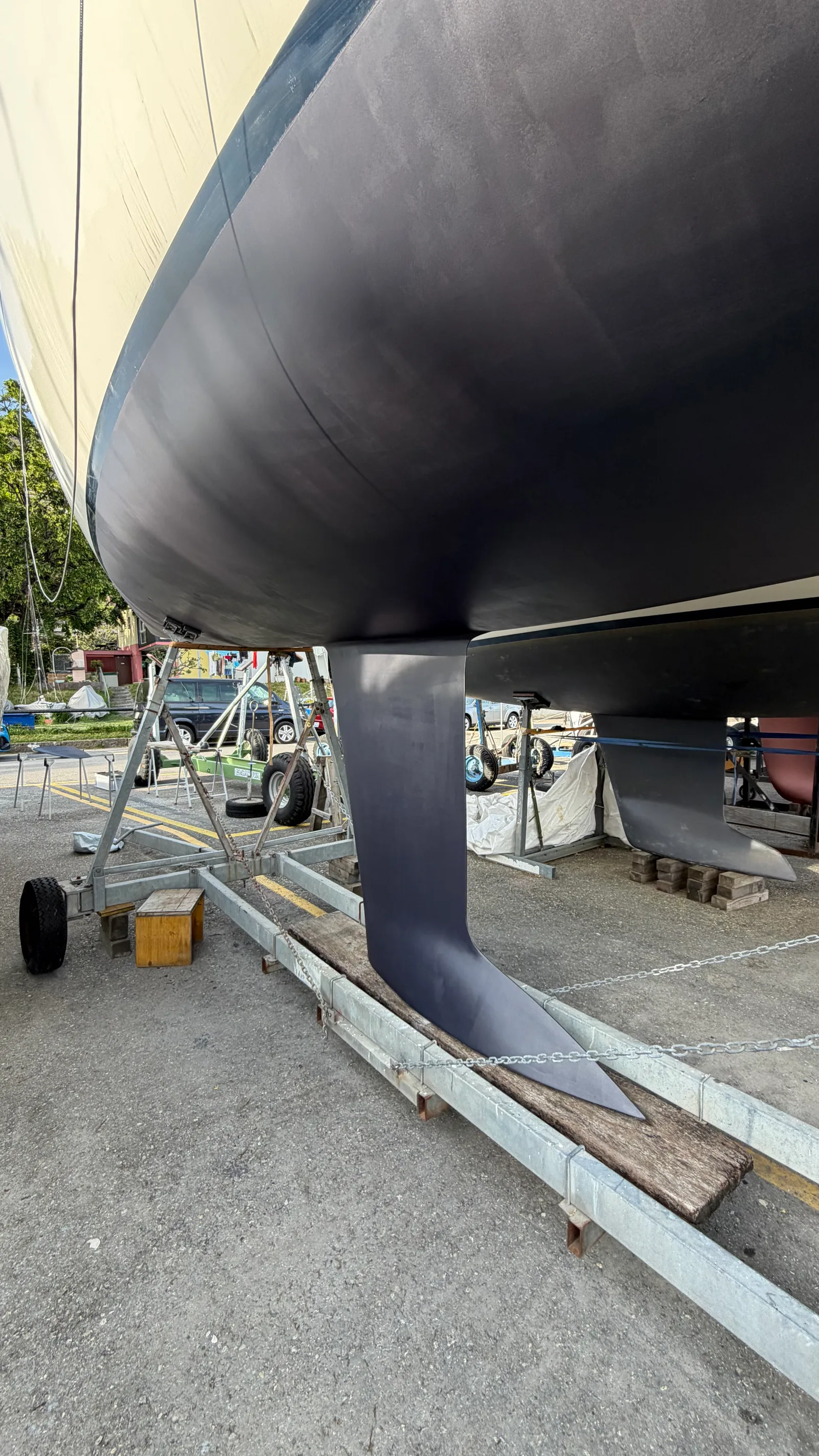
Renewing antifouling on a J/92s for Lake Geneva: sanding hull and appendages to a sound base, then three coats of hard graphite Thin Film.
Read next
Repositioning leaking swim-ladder sockets on a J/92s: FP4-filled holes, bonded backing plates, and a rebuilt, watertight cockpit floor.
A deck fitting that passes through the cockpit floor is a load path and a seal at once: it has to land where it is meant to work, and it has to keep the floor watertight where it penetrates. On Jamais, a 2007 J/92s at La Pichette on Lake Geneva, the two stainless sockets that hold the swim ladder were set too far forward and bedded in oval, badly sealed holes. Correcting them was more than moving two fittings — because the corrected position overlapped the old holes, the cockpit floor had to be rebuilt solid before it could take them.
Two problems came together. The sockets were too far forward, so the ladder frame fouled the vertical aft face of the boat when shipped. And the holes that held them were oval — worn or bored oversize — and had been patched with sealant rather than properly filled.
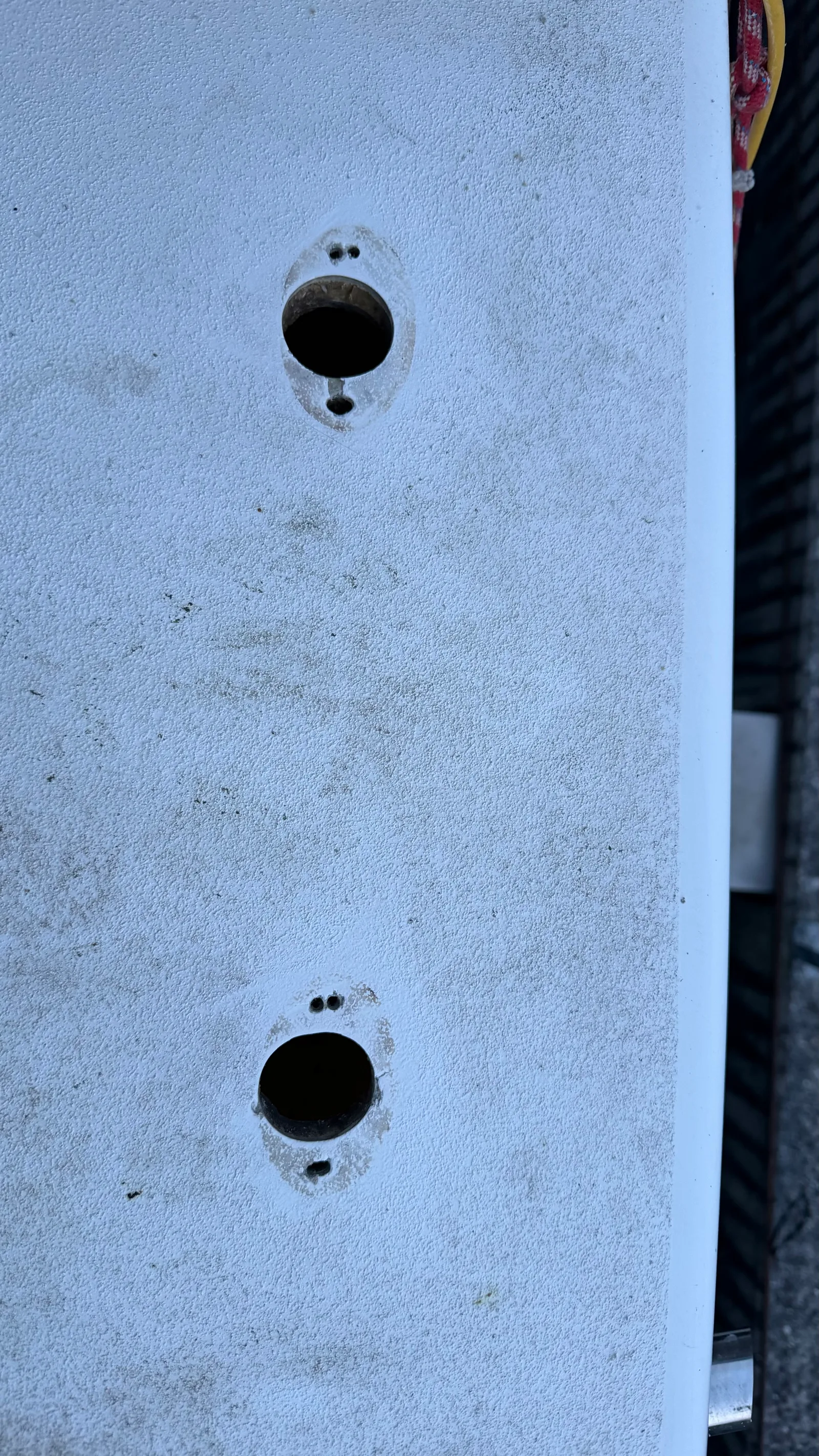
That patch leaked. Over time roughly 35 to 40 litres of water had worked into the boat, most of it pooling in the central compartment aft of the diesel tank, under the cockpit, trapped between the two wood panels that continue aft at the back of the engine bay. That standing water was a large part of why the boat was pervasively damp when it was bought. So this was not a cosmetic misalignment: it was an active leak, with a moisture cost throughout the interior.
Here is the constraint that shaped the whole job: the ladder only needed to move slightly aft to clear the transom, so the new socket holes would partially overlap the old ones. You cannot drill a sound, load-bearing hole half into old sealant and half into a void — so the old holes had to become solid material first, and the floor around them had to be strong enough to drill into again.
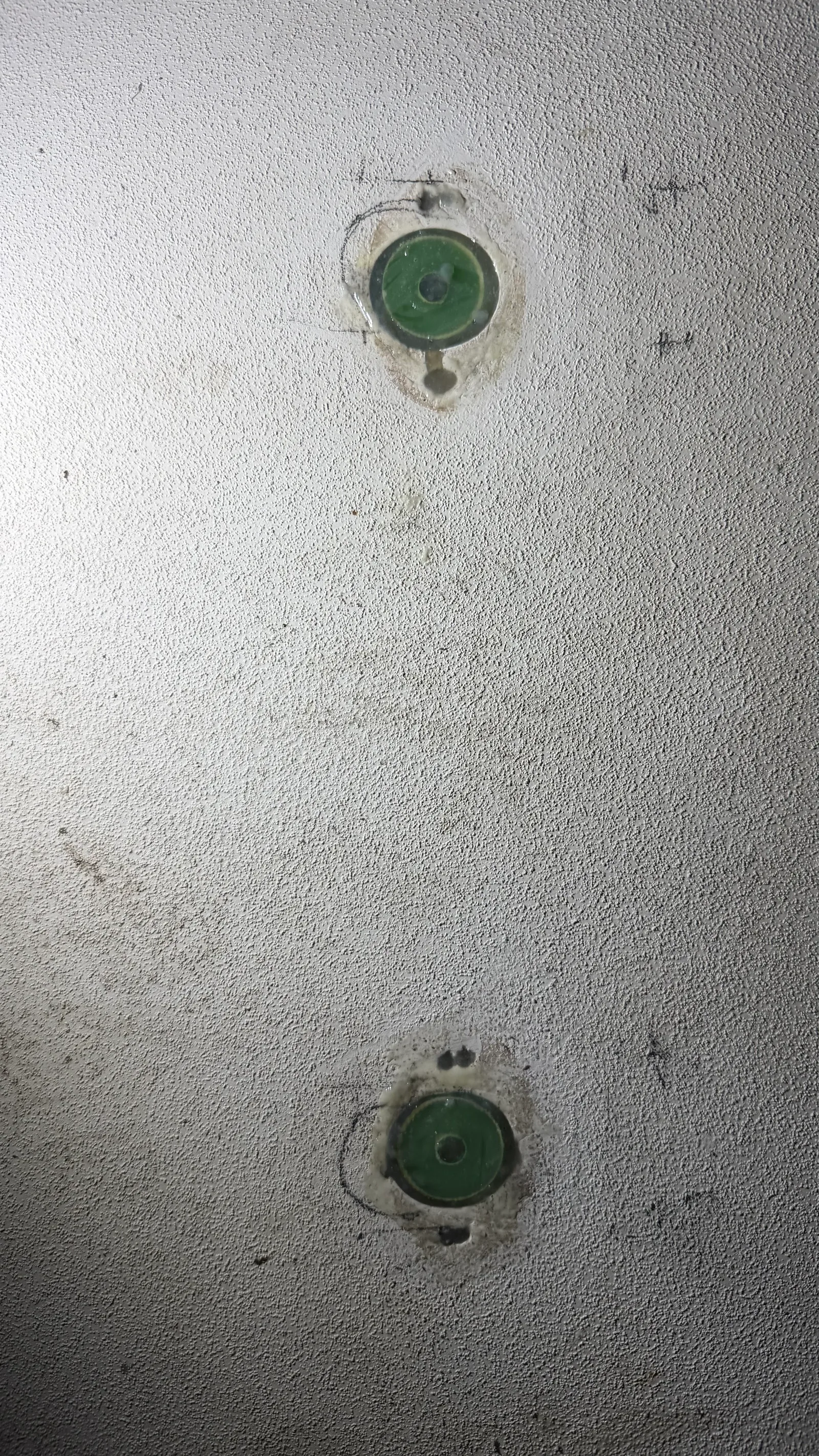
With the stainless sockets removed, each old hole was filled with three FP4 discs bonded in West System Six10 epoxy — a rigid composite plug through the full thickness of the floor, not a flexible sealant patch. FP4 is a glass-fibre and epoxy laminate (the same family as G10 / FR4): it doesn’t absorb water, rot or delaminate, and bonded in epoxy it becomes one body with the floor.
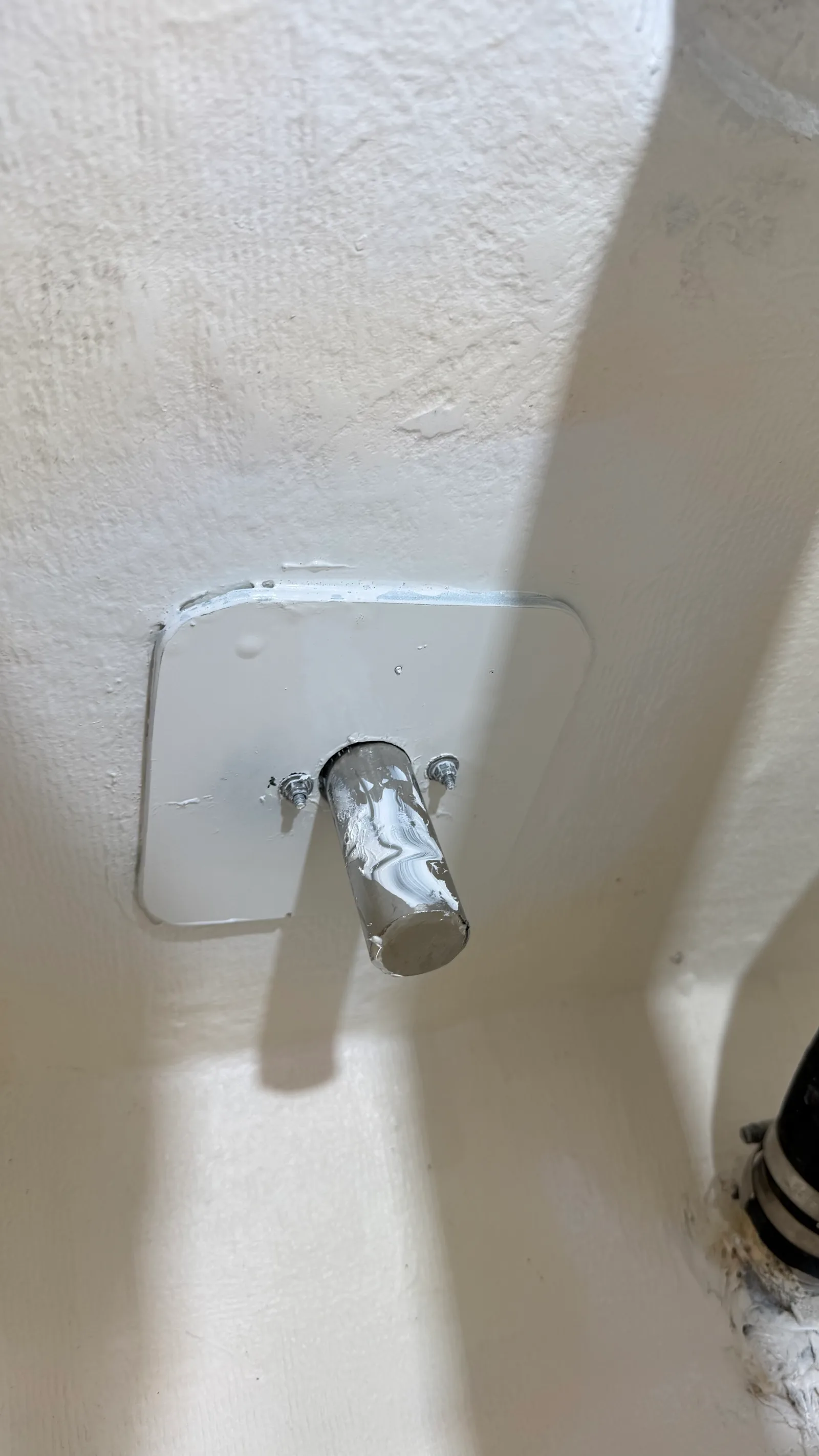
Below the cockpit, two FP4 reinforcement plates were bonded to the underside and finished in gelcoat — spreading the ladder’s load into the structure and backing the new fixings. It is the same reinforcement approach used for the manual bilge-pump mount. Everything on and below the cockpit was then sanded back and faired.
With the floor rebuilt solid top and bottom, the new holes were drilled in the correct position — partially overlapping the filled old ones, which is exactly why the fill and the backing had to be sound. The ladder now clears the transom. The sockets were re-bedded and through-bolted with Sikaflex UV, sealing the penetration properly this time.
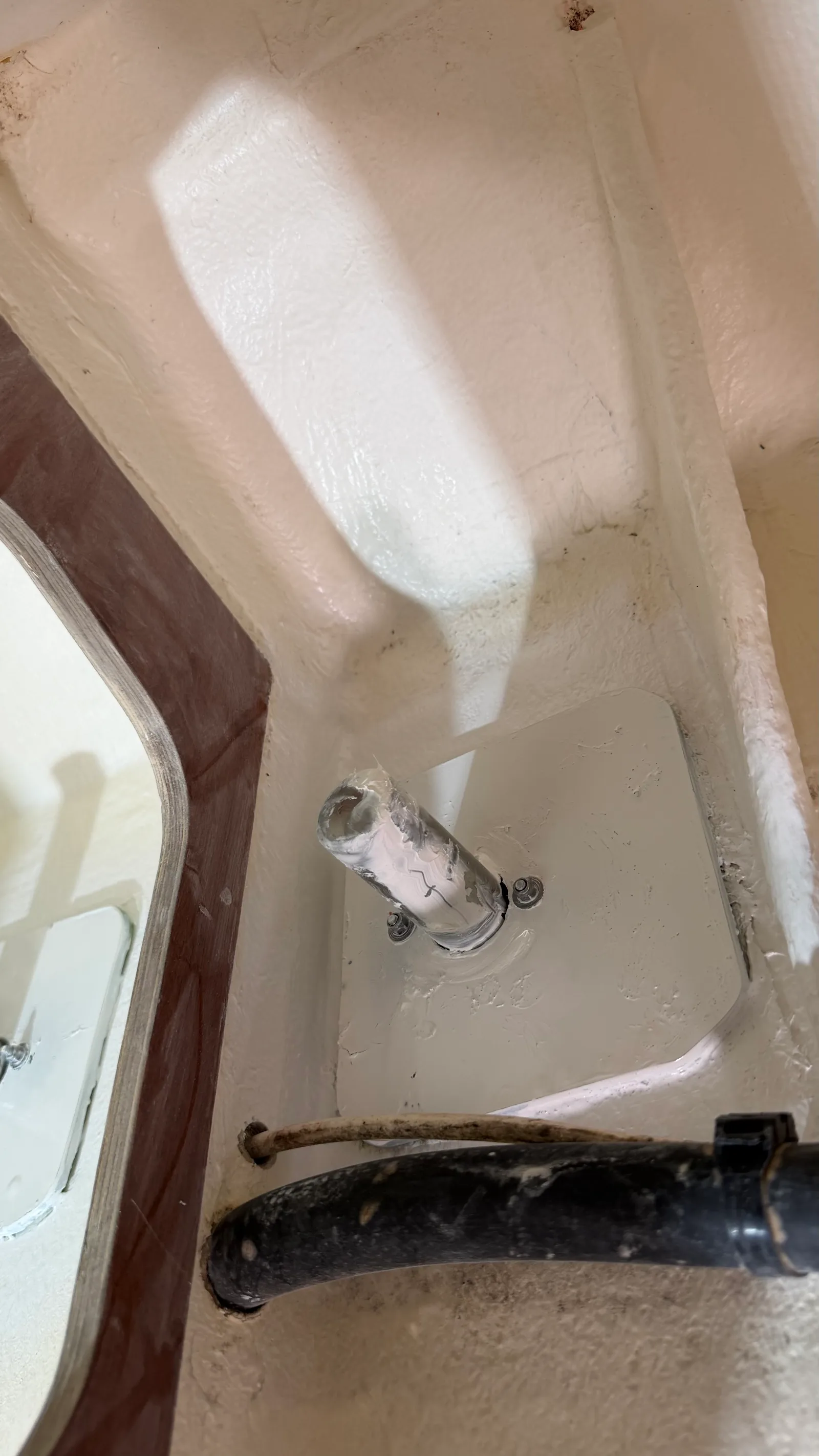
The result is a fitting that lands where it should, on a floor that is stronger there than when it left the yard, with a seal that has sound material to work against.
Why did the swim ladder let water into the boat? Its sockets sat in oval holes that had been patched with sealant instead of properly filled. The patch leaked, and over time 35 to 40 litres collected in the compartment under the cockpit — the source of much of the boat’s interior damp.
Can you drill a new fitting hole that overlaps an old one? Yes, provided the old hole is first turned back into solid material. Here each old hole was filled with bonded FP4 discs and backed with an FP4 plate below deck, so the new, partially overlapping holes were drilled into sound laminate — not into old sealant or a void.
How do you fill an oversized hole in a cockpit floor? With a rigid, bonded plug, not sealant. Stacked FP4 discs set in epoxy fill the hole through the floor’s thickness and become part of the structure; sealant alone flexes and eventually leaks again.
What do you bed a swim-ladder socket with? A marine polyurethane sealant such as Sikaflex UV, over a sound, faired landing. The bedding seals the penetration; the solid floor beneath is what lets it stay sealed.
This job is part of Jamais’s logbook. See also the two-pump bilge setup and the solar ventilation that keeps the interior dry.
Renewing antifouling on a J/92s for Lake Geneva: sanding hull and appendages to a sound base, then three coats of hard graphite Thin Film.
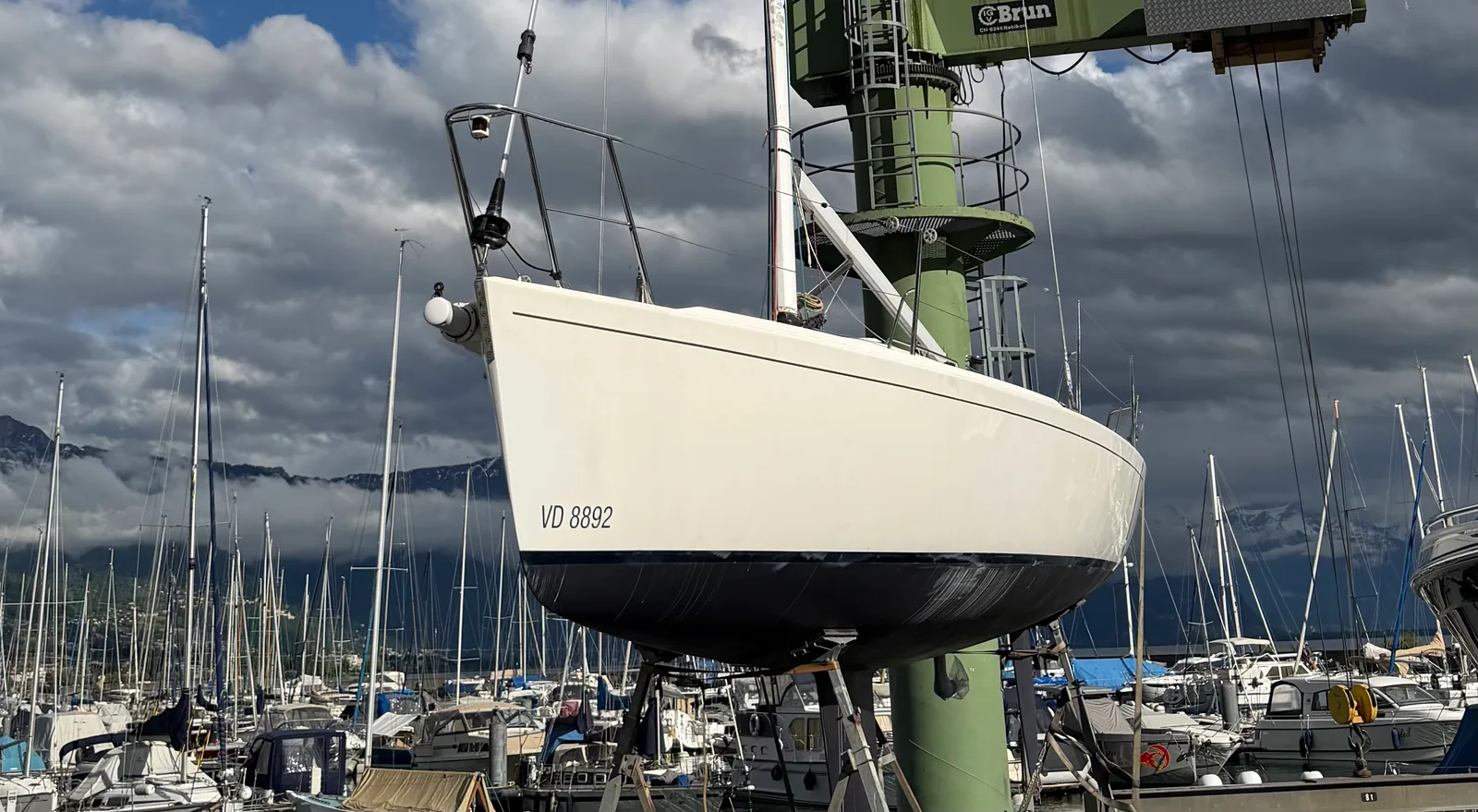
Repairing a chipped bow and scratched port topside on a J/92s: two-component gelcoat, progressive sanding, spray finish and polishing to a bright, even hull.
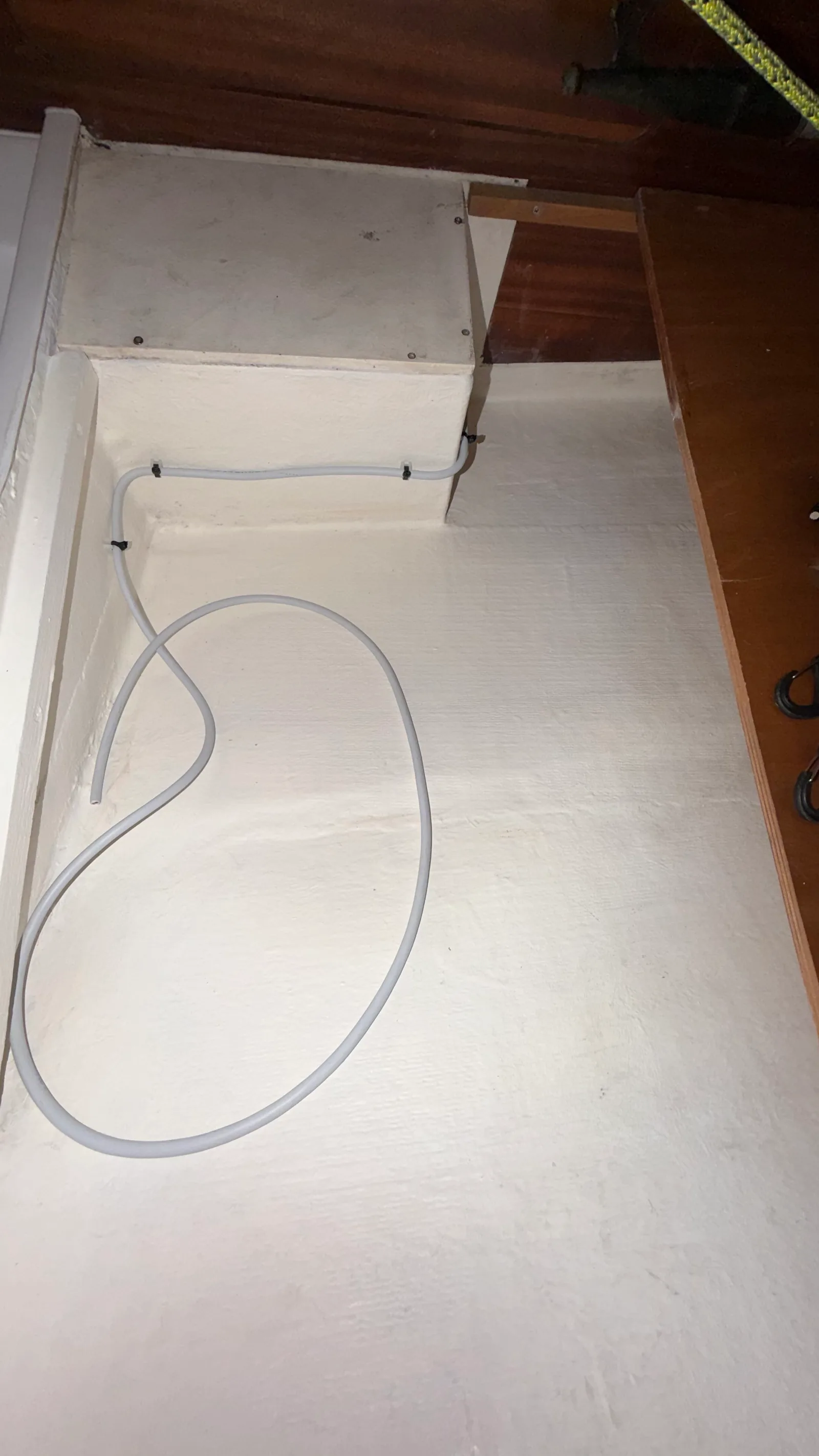
Repairing cracked structural bulkheads on a J/92s with epoxy injection (West System Six10), a spray gelcoat finish, and a repainted bilge.
Order your parts, or let’s talk through your programme first.