Systems 3 min read
Stern safety refit: horseshoe buoy, stanchion and stern light
Restoring a J/92s stern safety station: an Osculati horseshoe buoy kit, a straightened stanchion, and a re-welded stern-light plate.
Read next
How and why to change the rudder-shaft bearings on a J/92s: the two bearings differ by design, the lower one a JEFA self-aligning roller bearing.
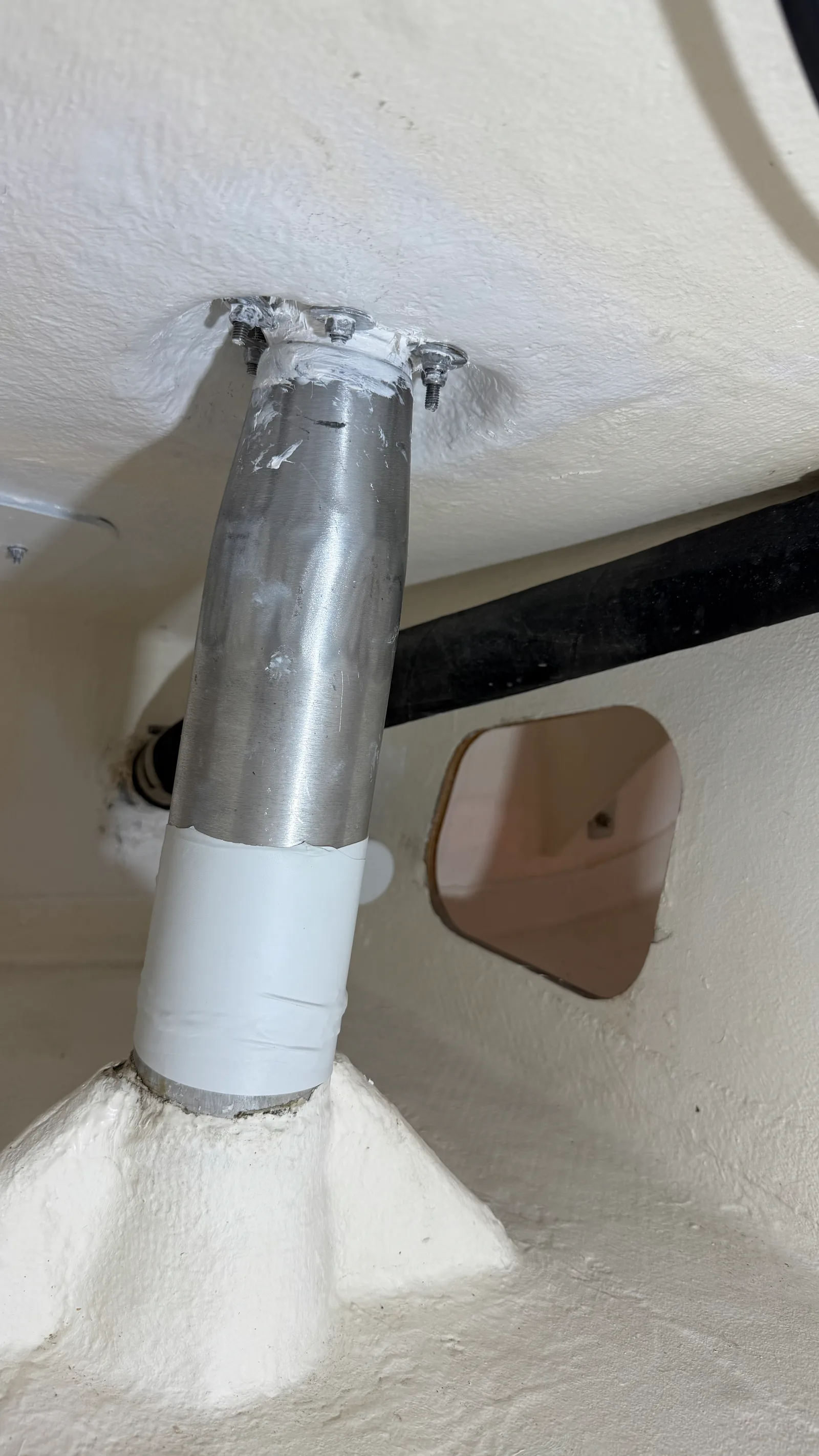
Play in a rudder comes from the shaft bearings: they are the wear part, and on a J/92s the two bearings are deliberately different. On Jamais, a 2008 J/92s on Lake Geneva, the winter haul-out was the chance to drop the rudder and replace the two bearings with the right parts — a plain one on top, a roller one at the bottom.
A rudder that moves by hand, that knocks upwind or has lost its feel isn’t the shaft that has “gone slack”: it’s the bearings that have worn. A worn bearing lets the shaft wander in its tube — you lose helm feel and, above all, you load the rudder tube and the hull instead of the sacrificial bearing designed for exactly that. So you replace the wear part before it eats into the parts you don’t replace.
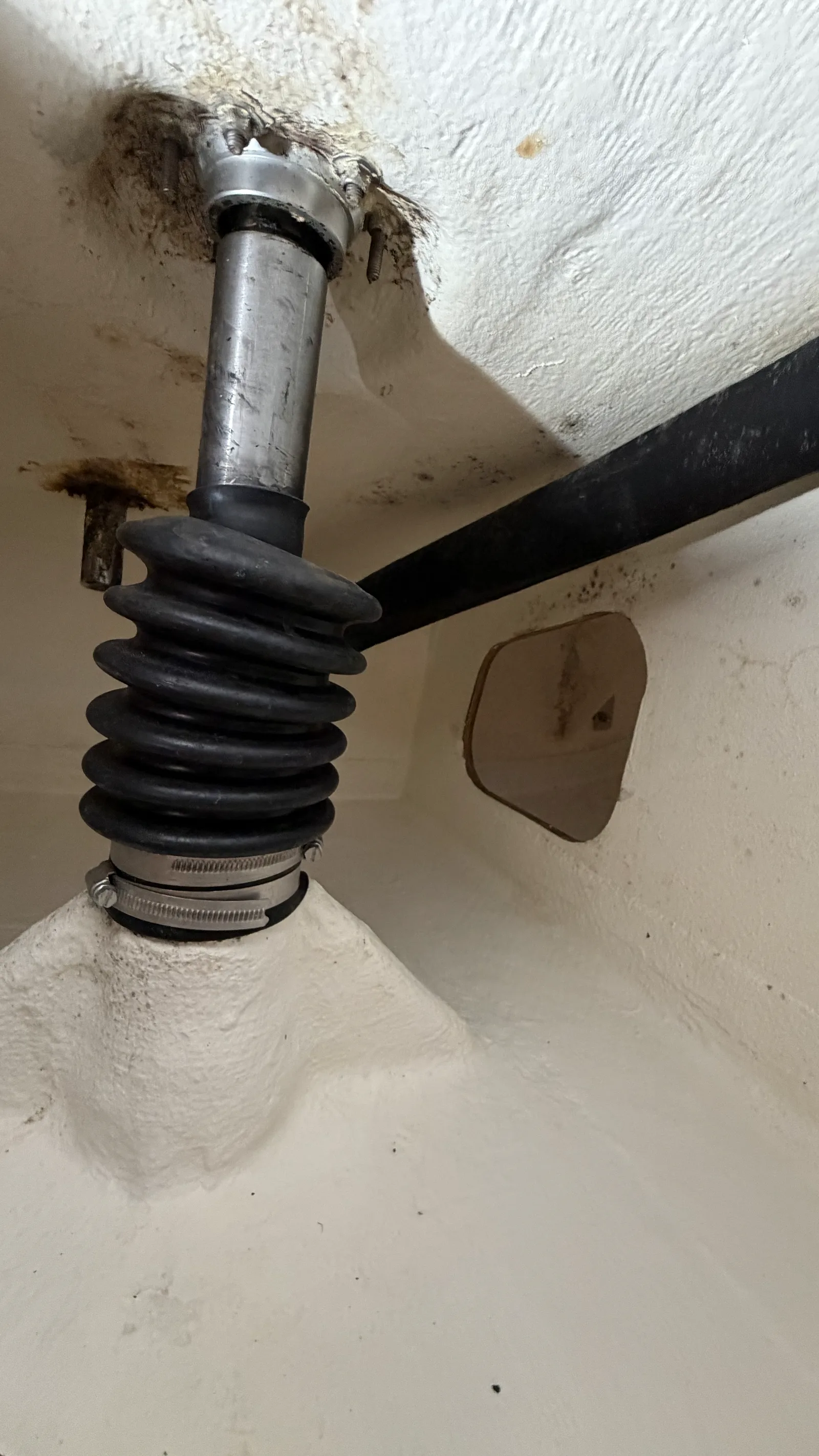
On the J/92s system (stainless-shaft version, from 2007), the two bearings aren’t identical — and that’s no accident:
The shaft is stepped, larger at the bottom than the top: that’s where the loads pass, so that’s where the diameter — and the bearing — must be more generous. And the lower bearing is self-aligning on purpose: it tolerates the small misalignment between the two bearing planes, instead of forcing on a shaft that’s never perfectly in line with both. The material, PETP, is self-lubricating and stable in water — it doesn’t swell or seize the way an absorbent material would.
The parts don’t all come from the same place, and that’s a choice.
The upper bearing, the aluminium tube (rudder-trunk tube) and the friction washers, I got from International Boat Spares. That’s the convenience: you select the boat model — here the stainless-shaft J/92s version — and you get a ready-made selection of the right parts for that trunk, instead of having to cross-check dimensions and references by hand.
For the lower bearing, I preferred to go straight to JEFA. A friend who owns a J/97E had pointed out that JEFA makes roller bearings for this size too — a better solution than a plain bearing right where the biggest loads pass. After checking by email, JEFA helped me identify the correct model (datasheet): the M13-122-44, a PETP roller bearing for a Ø 44 mm shaft. The extra email is worth it: you fit the right part, not one that “goes in”.
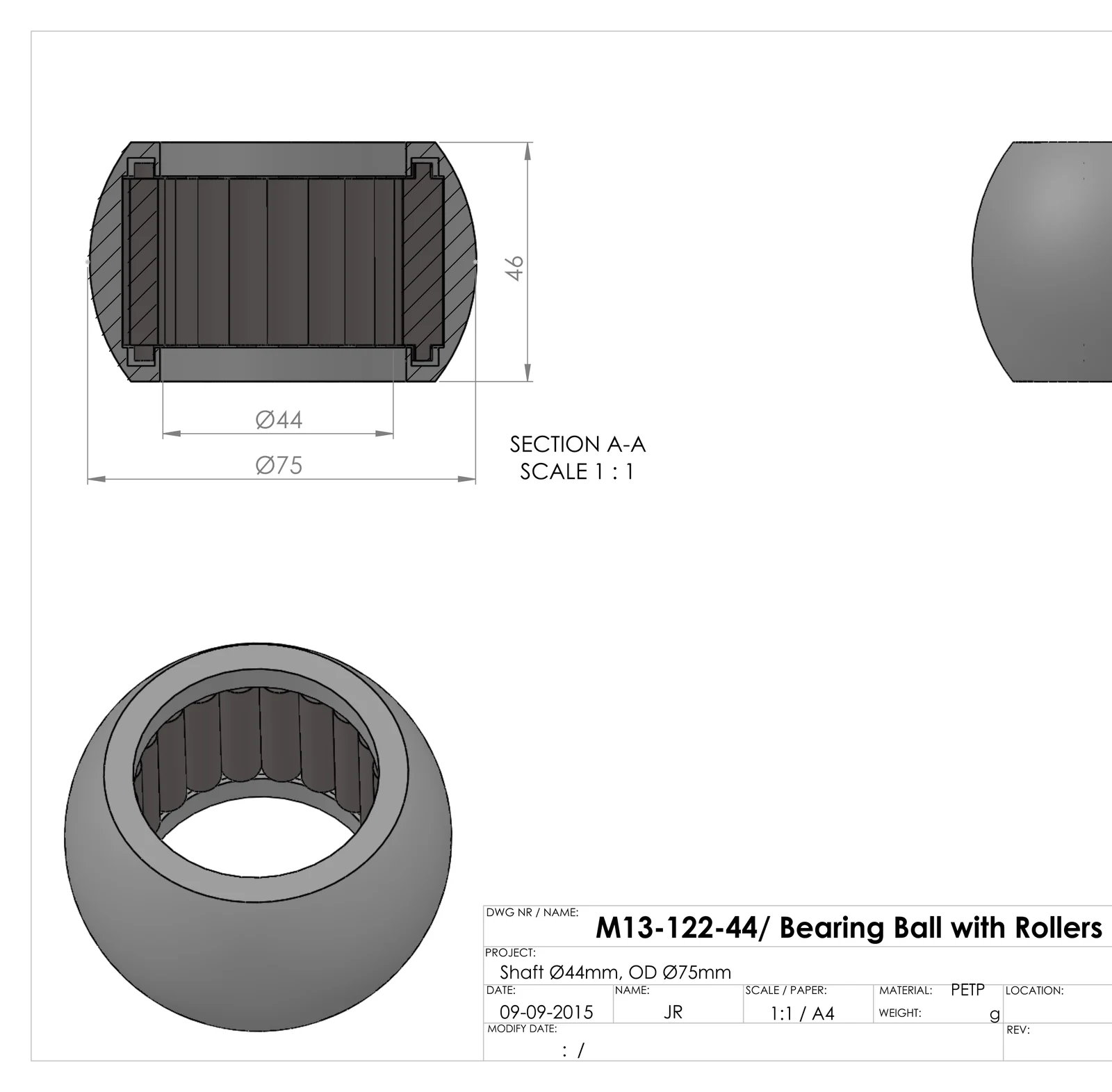
A rudder with no play, helm feel restored, and the loads back through the intended wear part — not through the hull. Maintenance you don’t see under sail, but feel at once on the helm.
Why are the two bearings on a J/92s different? Because the shaft is stepped: smaller on top, 44 mm at the bottom. The bottom, more heavily loaded, gets a larger, roller bearing; the top, a plain bearing.
Why a roller bearing at the bottom? Because that’s where the biggest loads pass: a self-aligning roller bearing tolerates the small misalignment and works better than a plain one. JEFA makes it for this size too — a detail worth chasing down.
Where do you find the right parts for a J/92s rudder trunk? A site that filters spares by boat model makes the upper bearing, tube and washers easy; for the lower roller bearing, better to go through JEFA to identify the right reference.
This job is part of Jamais’s logbook. See also servicing the Gori prop and Sail Drive.
Restoring a J/92s stern safety station: an Osculati horseshoe buoy kit, a straightened stanchion, and a re-welded stern-light plate.
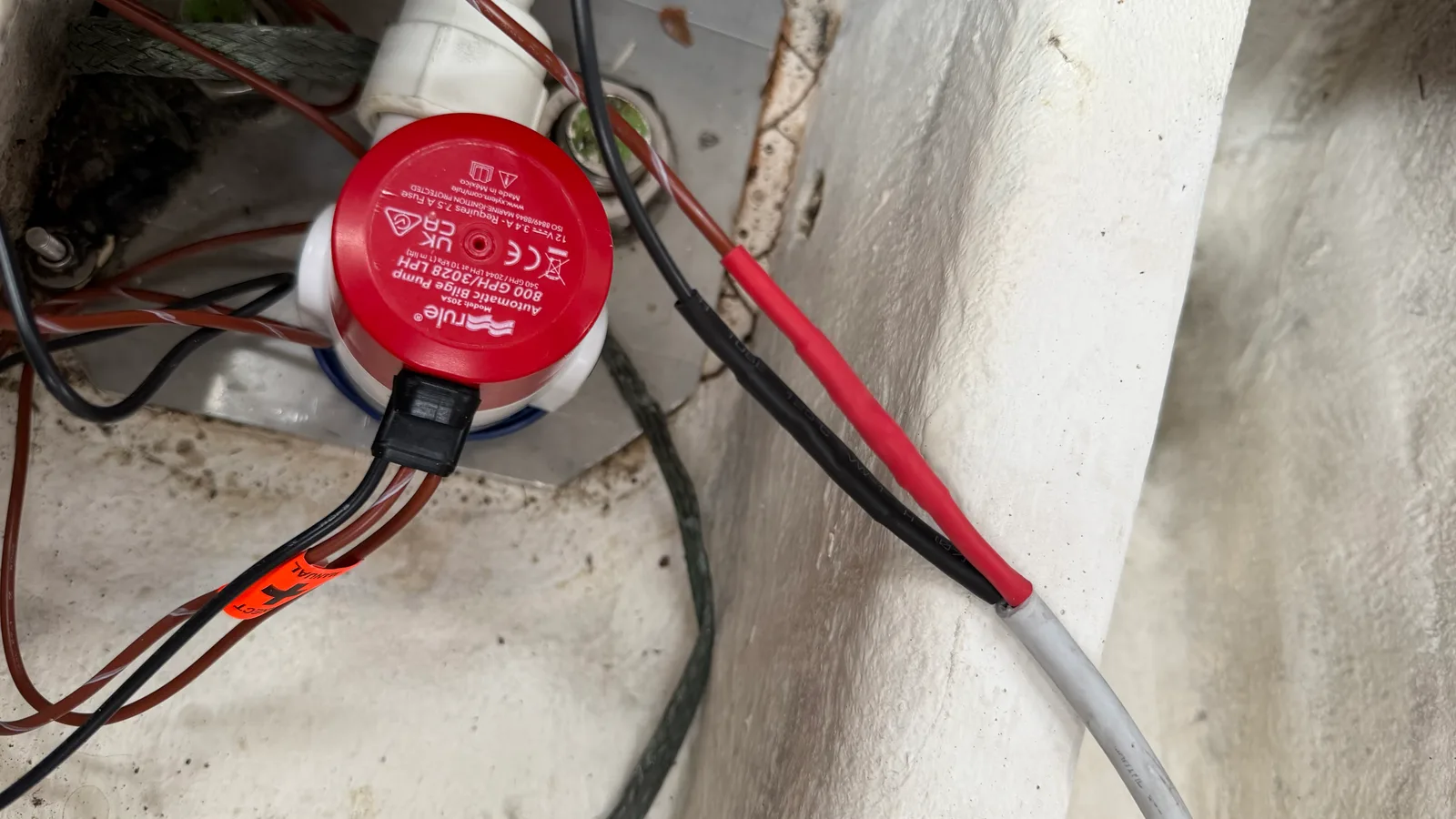
A manual and an automatic bilge pump on a J/92s: FP4 cockpit reinforcement, automatic float-switch operation, and a waterproof fuse holder.
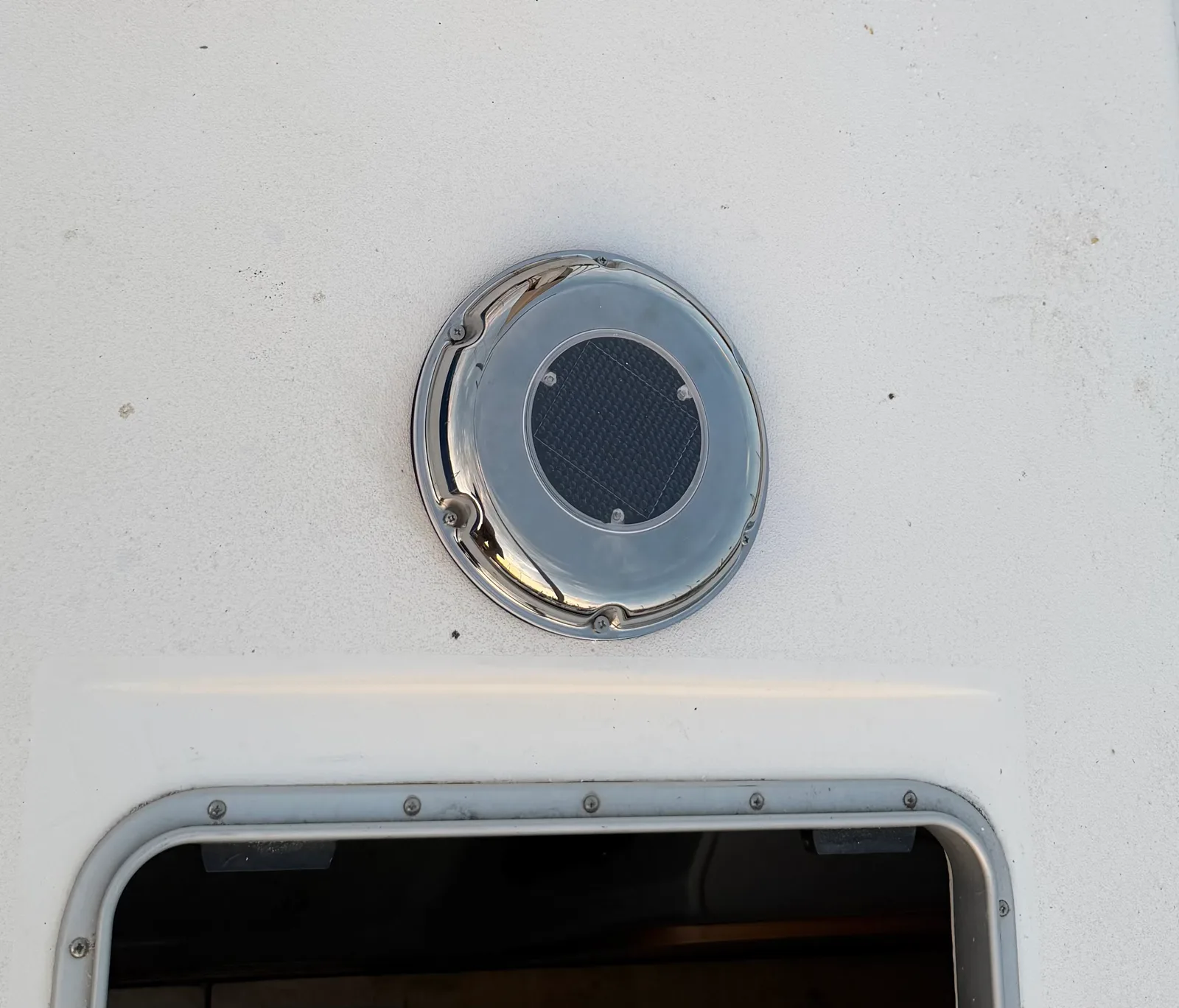
An autonomous solar vent on a J/92s: a low-to-high air circuit, 25 m³/h extraction with no drain on the batteries, and a mould-free interior.
Order your parts, or let’s talk through your programme first.