Rigging 3 min read
Re-running Dyneema halyards: Marlow D2 Racing on a J/92s
Re-running the halyards of a J/92s on Lake Geneva in Marlow D2 Racing 8 mm: why size down, the colour logic, and terminations you can't drop overboard.
Read next
Rebuilding a J/92s cockpit: Spinlock XTS clutches and a Dyneema cascade vang for more power and a cleaner, more ergonomic deck layout.
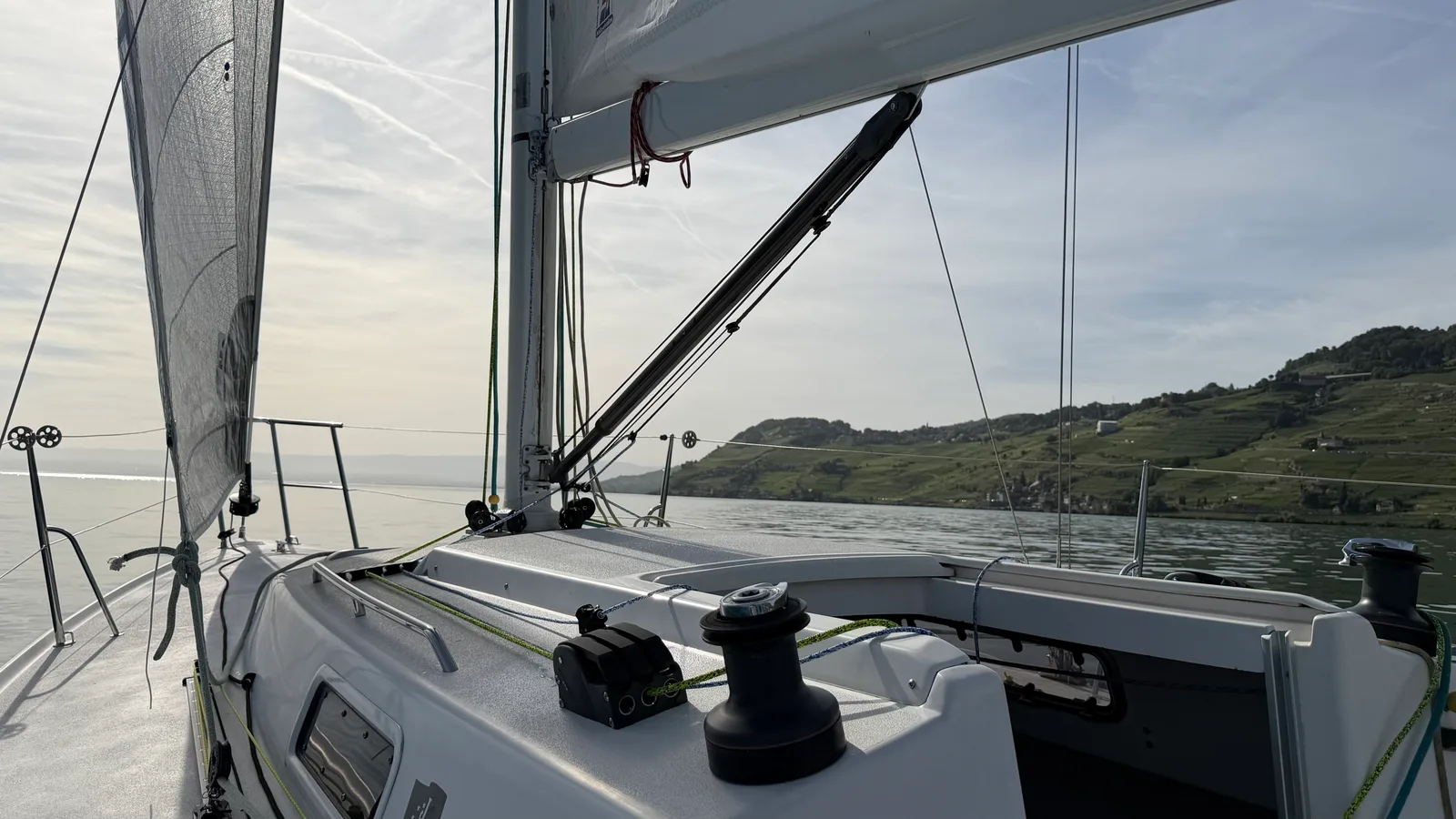
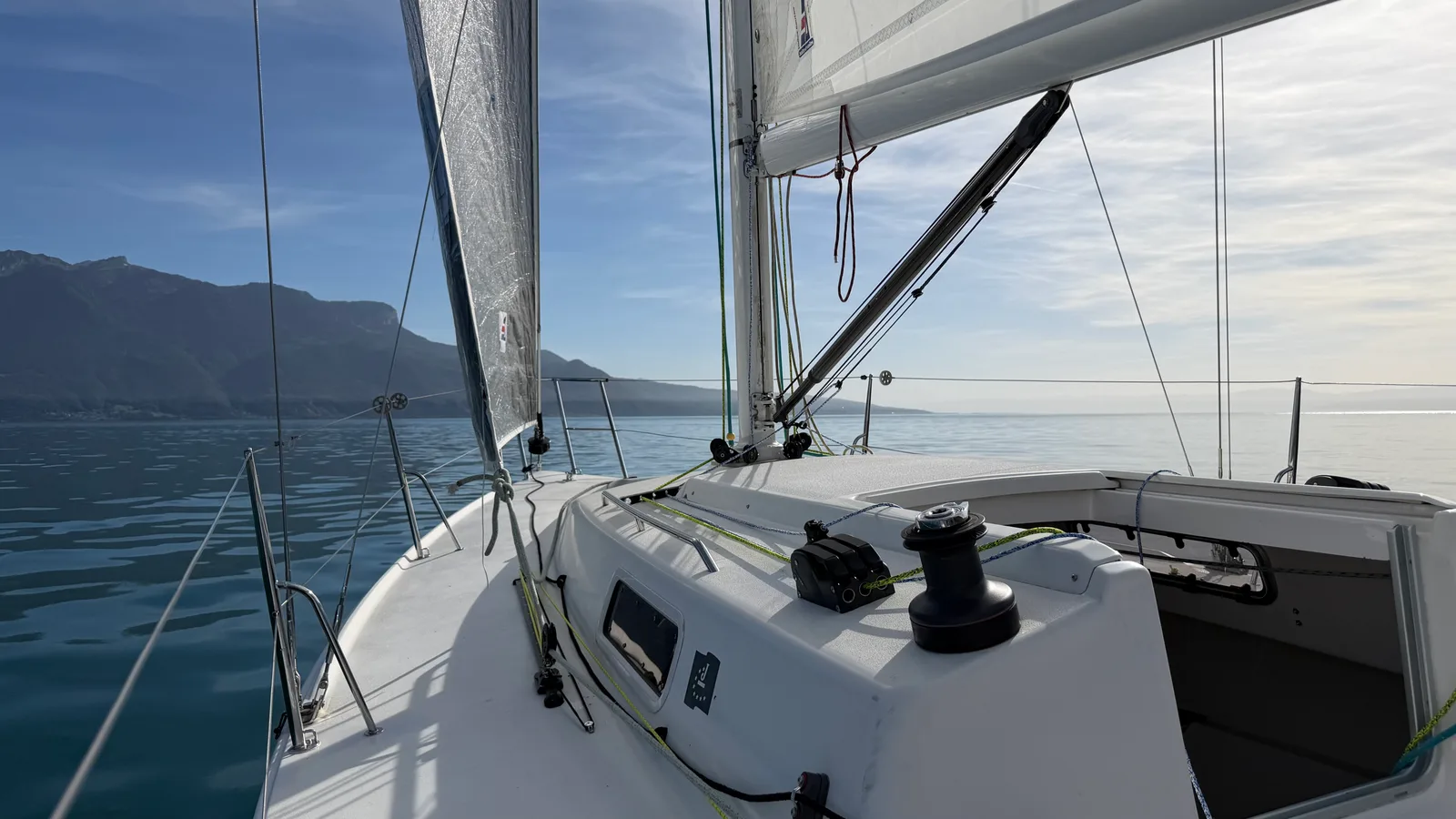
Broken clutches: the right chance to reorganise how the deck manoeuvres are handled. On Jamais, a 2008 J/92s on Lake Geneva, replacing the clutches became the starting point for rethinking where and how the lines are trimmed — and for rebuilding the vang as a cascade. The aim: reach the vang from where the hands already are — hiking on the rail, or at the helm when shorthanded. Here is the reasoning, and a useful lesson on a cascade’s real efficiency.
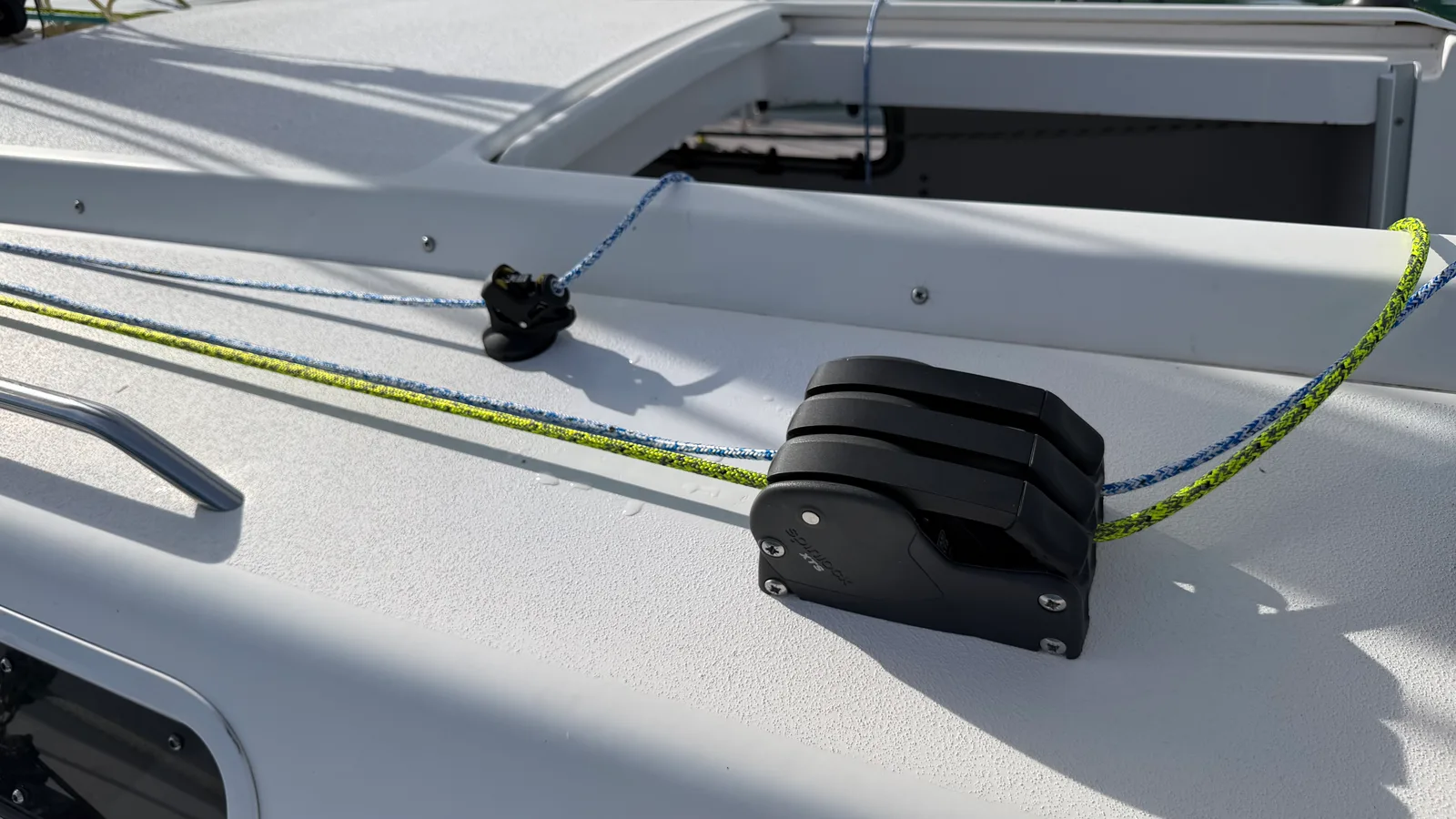
The old Spinlock XAS clutches were replaced with Spinlock XTS, using two XTS 6-10 clutches sized for the boat’s line diameters. The reason is holding load: the XTS 6-10 is rated 700 kg, against about 575 kg for the XAS it replaced — with better ergonomics on top. The split follows the inventory: on the port side the main halyard, the reef and the second gennaker; on the starboard side the jib halyard, the first gennaker and the cunningham.
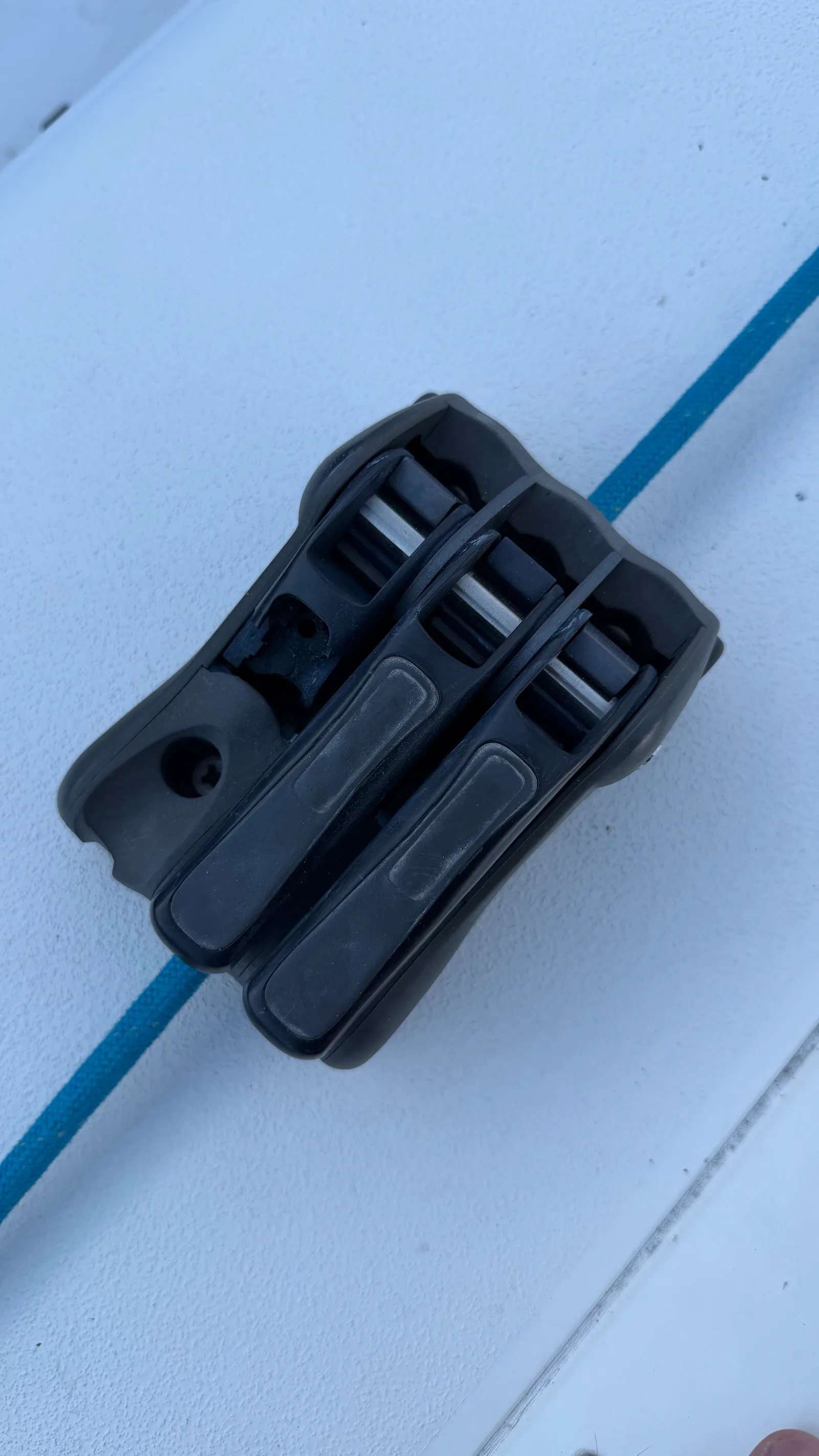
The original vang was a Harken 6:1 purchase (two triple blocks). It was replaced with a stripped Dyneema 78 cascade on low-friction rings — bare Dyneema was chosen for its strength and low friction through the rings — led to Spinlock PXR cam cleats on rotating turrets through deck organisers. Only the final double-ended tail is in Marlow Excel Fusion.
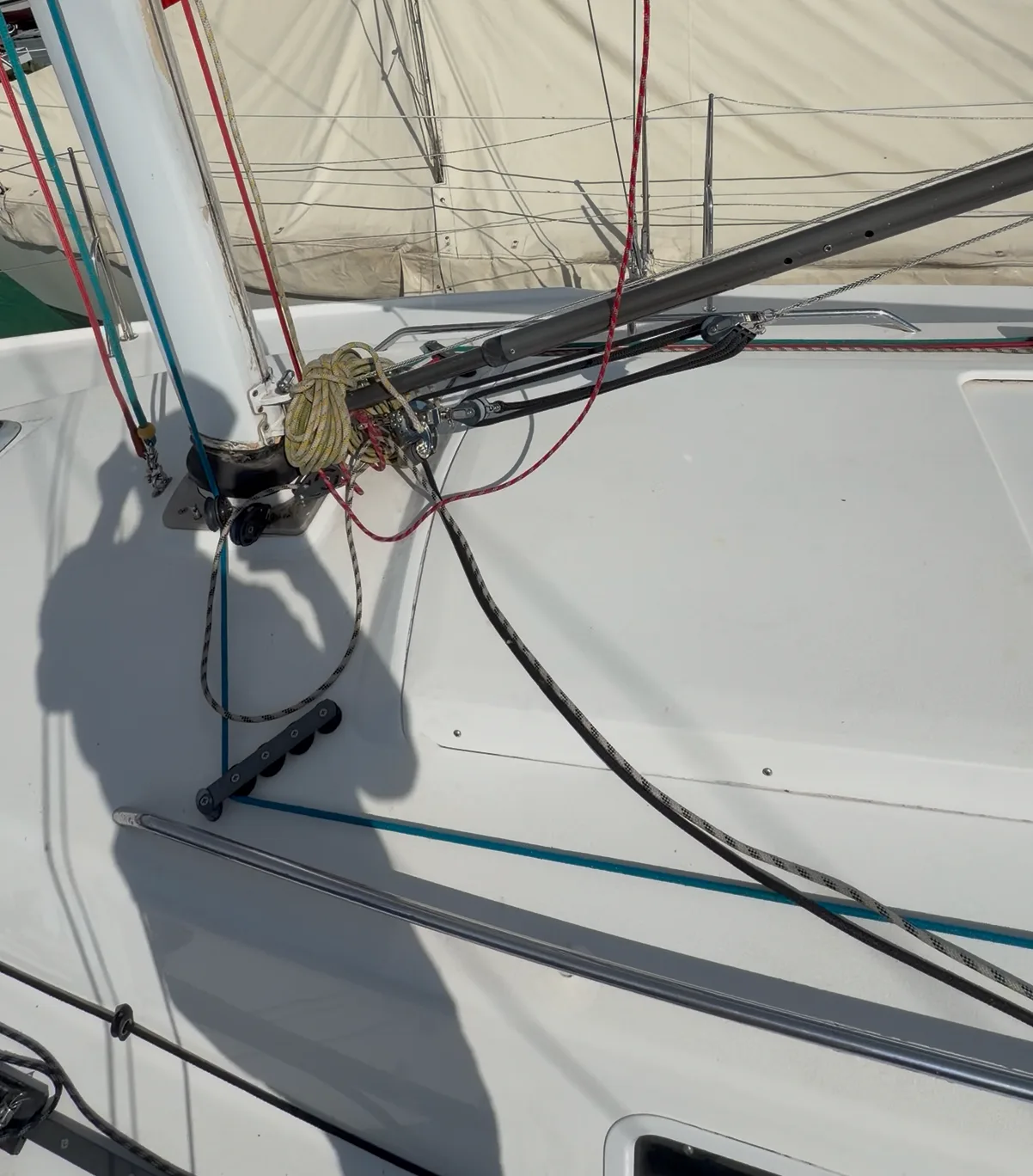
On paper this cascade is designed around a 16:1 — far more than the 6:1 it replaced. In the water it delivers less than the nominal figure (more on that below), but it still comes out more powerful than the old purchase, with the real bonus on top: ergonomics. Double-ended trimming from the rail, port/starboard symmetry, less weight at the mast base, fewer moving parts.
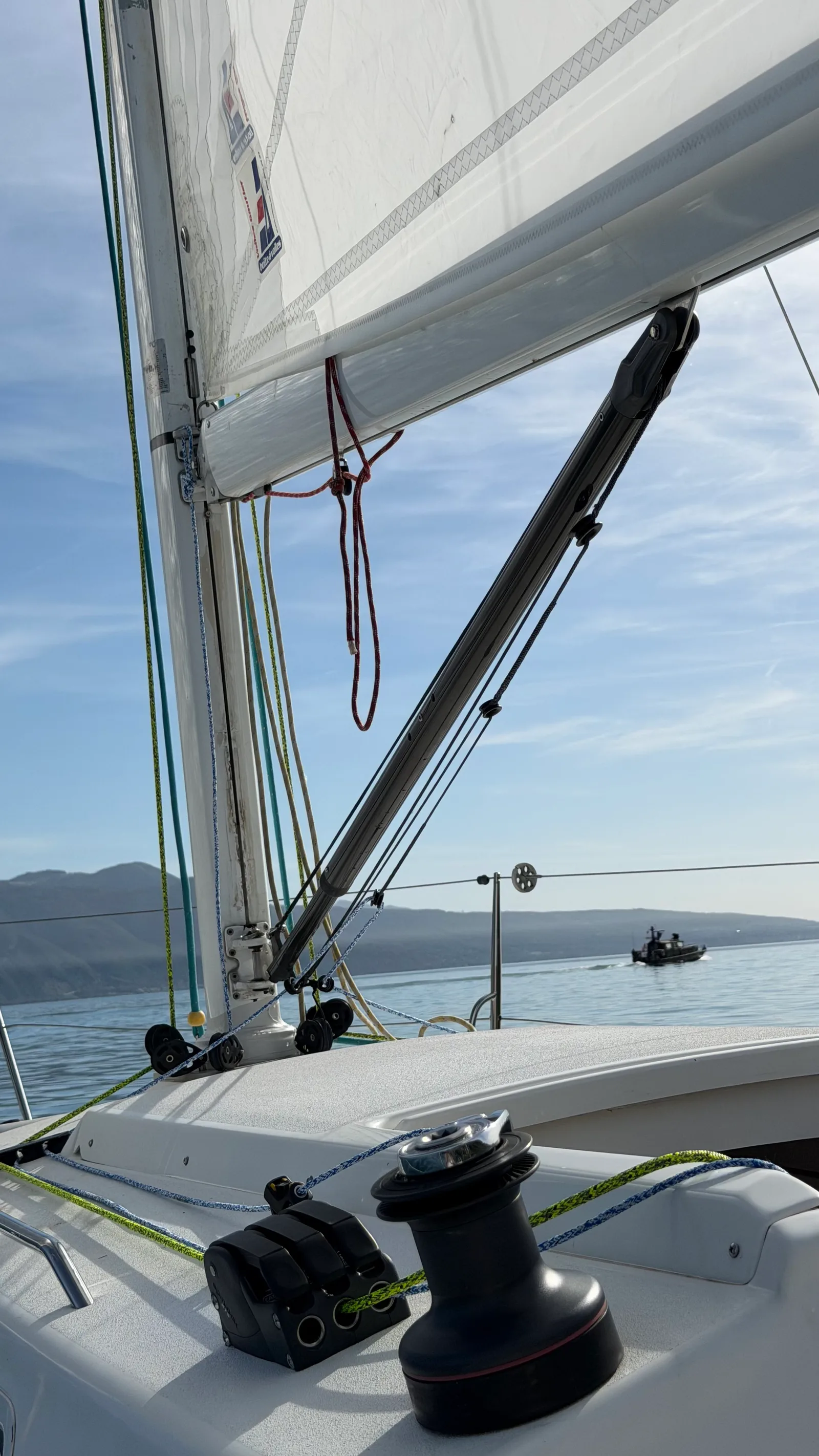
The ratio printed on a purchase is the theoretical one; what it actually delivers depends on how it is built. On a cascade, real efficiency is governed mostly by a few things:
The practical result: our cascade, a theoretical 16:1, really delivers around 12:1, perhaps a little less. That is still a clear step up from the original 6:1.
On the two most heavily loaded stages of the cascade, ring friction weighs more: swapping exactly those two rings for ball-bearing blocks could recover a further 15–25% of delivered force. That is the system’s trade-off — simplicity and lightness against a little efficiency at the loaded points — and knowing it helps you decide where a block earns its place and where a ring is enough.
Moving the clutches made two concrete things possible.
It freed the right spot for the turret. Repositioning the clutches let the PXR cam cleat on its rotating turret sit where the vang can be trimmed easily in two situations that matter:
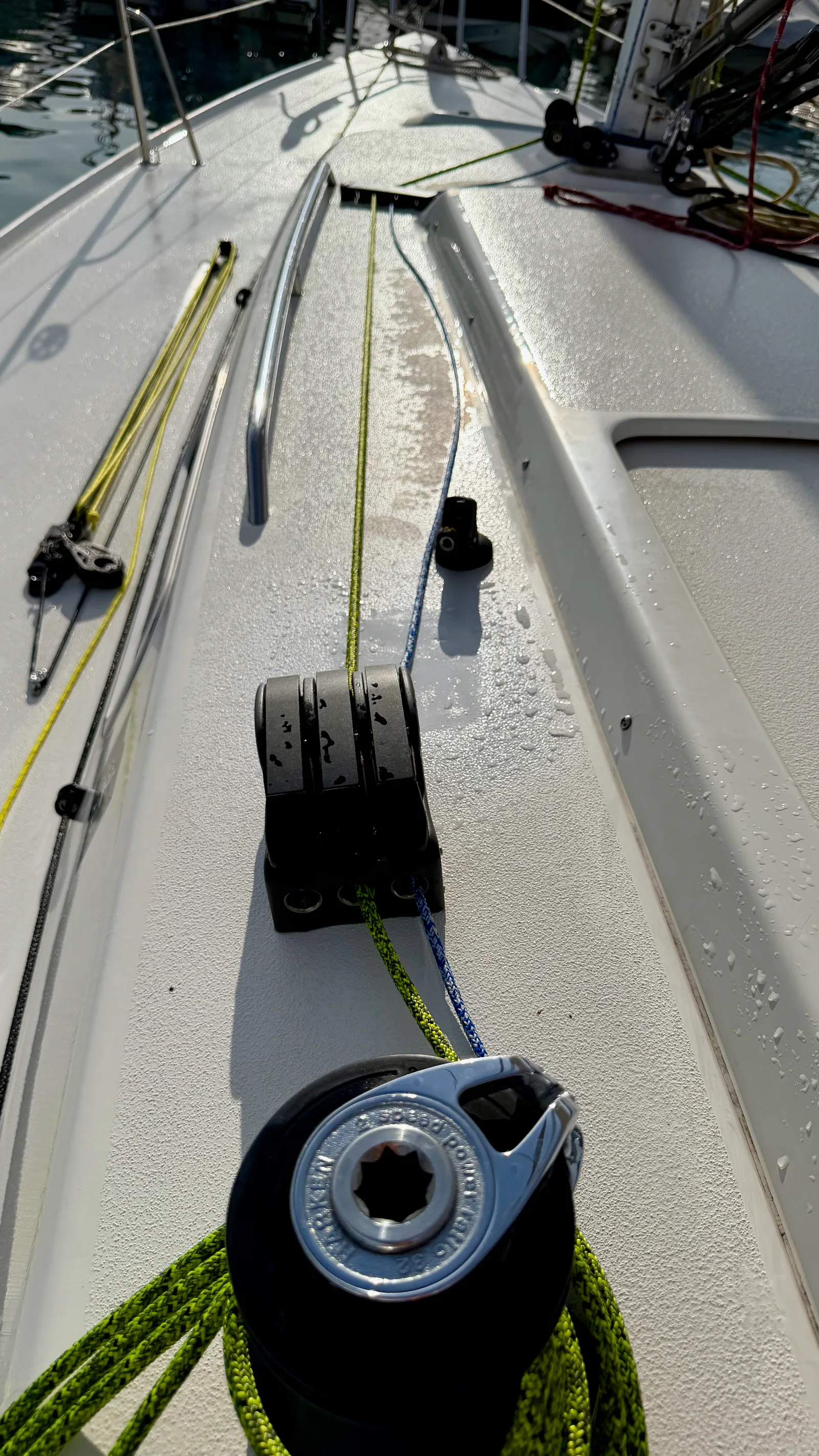
It left foot room on the coachroof. A crew member crossing the coachroof in a tack now has somewhere to plant a foot and duck under the boom, instead of tripping over the clutches.
Is a Dyneema cascade more powerful than a block purchase? It depends on how it’s built. The theoretical ratio is higher, but real efficiency depends on rings vs blocks, the line and the lead angles. On our boat the cascade, a theoretical 16:1, delivers about 12:1 — still more than the old 6:1.
Low-friction rings or ball-bearing blocks? Rings are lighter, simpler and more reliable; ball-bearing blocks deliver more under load. On a cascade’s most loaded points, blocks can recover 15–25% of delivered force.
Why move to XTS clutches? For holding load: the XTS 6-10 is rated 700 kg against about 575 kg for the XAS it replaced, with better ergonomics.
This job is part of Jamais’s logbook. See also the Marlow D2 Racing halyards.
Re-running the halyards of a J/92s on Lake Geneva in Marlow D2 Racing 8 mm: why size down, the colour logic, and terminations you can't drop overboard.
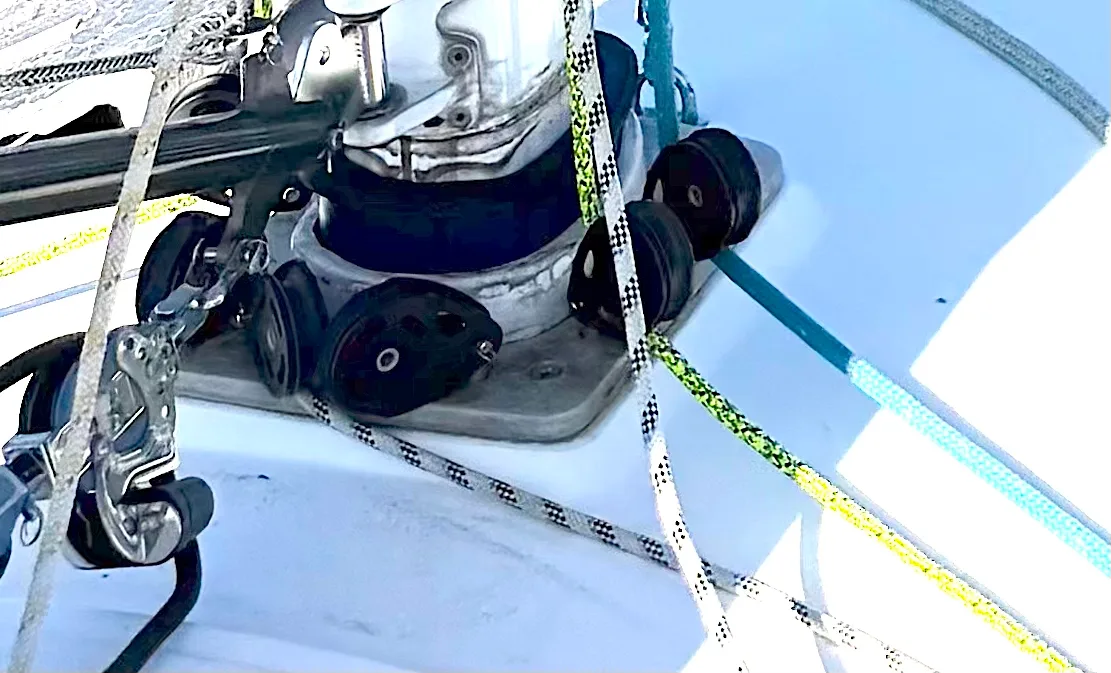
On a J/92s, a risen mast chock was a structural risk. Resetting it meant dropping all tension and redoing rake, centring and tensions.
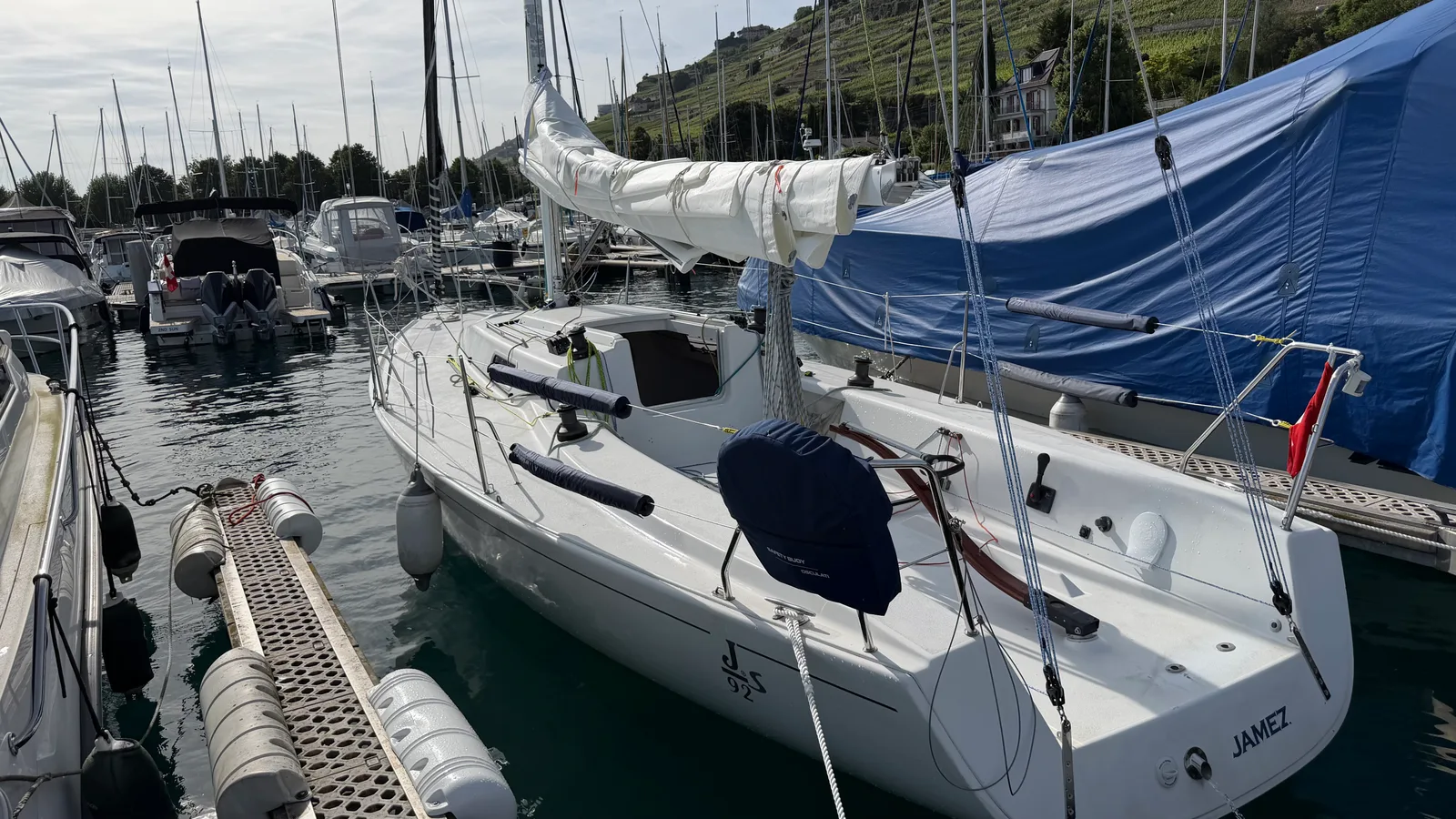
Restoring a J/92s stern safety station: an Osculati horseshoe buoy kit, a straightened stanchion, and a re-welded stern-light plate.
Order your parts, or let’s talk through your programme first.