
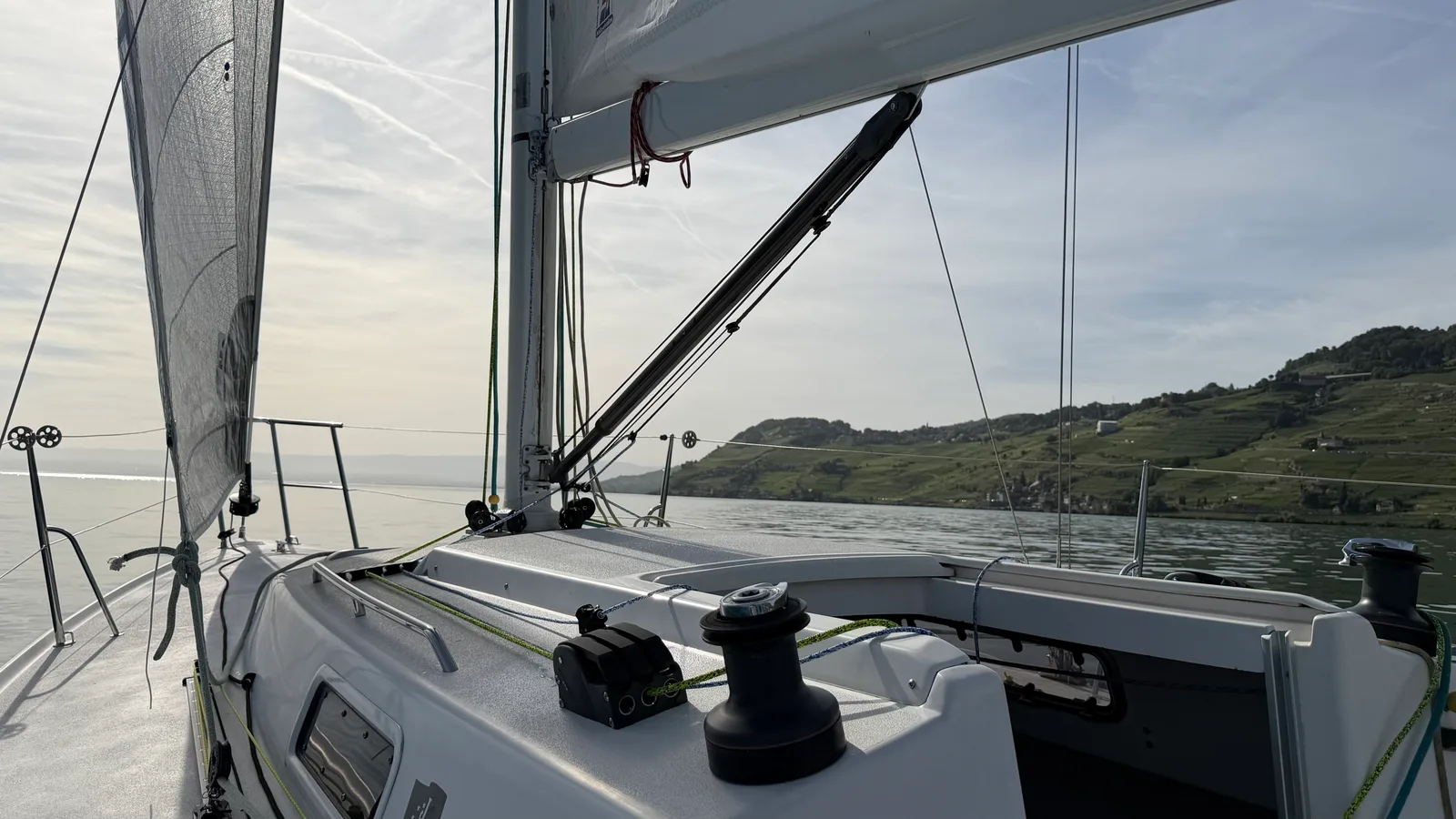
Rigging 3 min read

Re-running Dyneema halyards: Marlow D2 Racing on a J/92s

Re-running the halyards of a J/92s on Lake Geneva in Marlow D2 Racing 8 mm: why size down, the colour logic, and terminations you can't drop overboard.
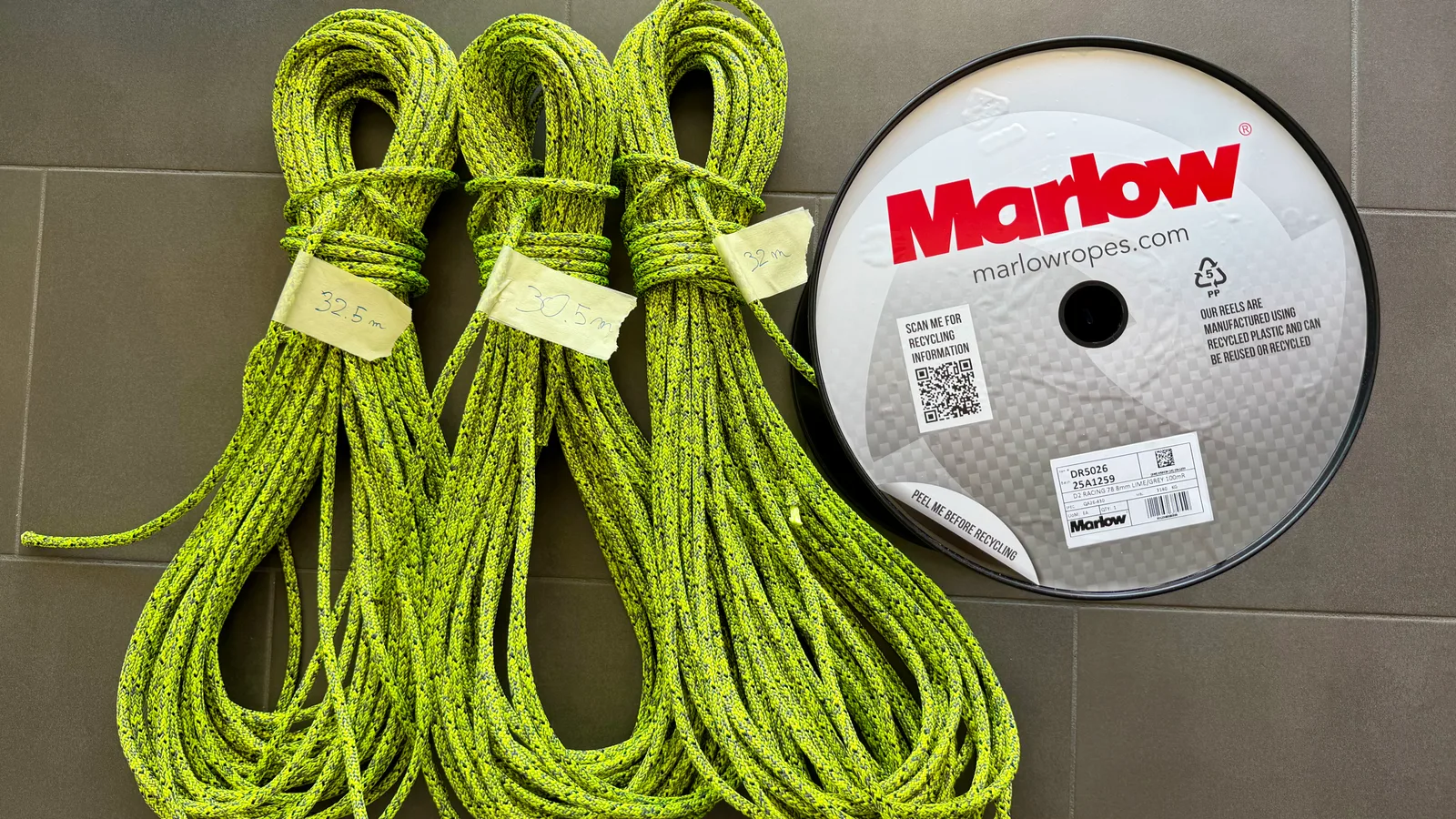
Three coiled Marlow D2 Racing 8 mm Dyneema SK78 halyards next to the Marlow spool before fitting on a J/92s

On Jamais, a 2008 J/92s on Lake Geneva, the old halyards — probably the originals — were 10 to 12 mm polyester and stretched under load. They were re-run in Marlow D2 Racing 8 mm: low stretch, a firm grip in the clutch. The rope choice is the easy part; the thought went into two things — the colour logic, and terminations you can’t drop overboard.

Why 8 mm is enough

The old lines were 10 or 12 mm — thick, because polyester needs section to resist stretch. The new Marlow D2 Racing 78 8 mm carries a Dyneema SK78 core with an average break load around 3490 kg. That is far beyond the working loads on a boat this size, so dropping two or three millimetres of diameter costs nothing in safety while gaining low stretch, less weight aloft and easier handling. The pre-stretched core kills the elongation; the polyester cover grips in the clutch.
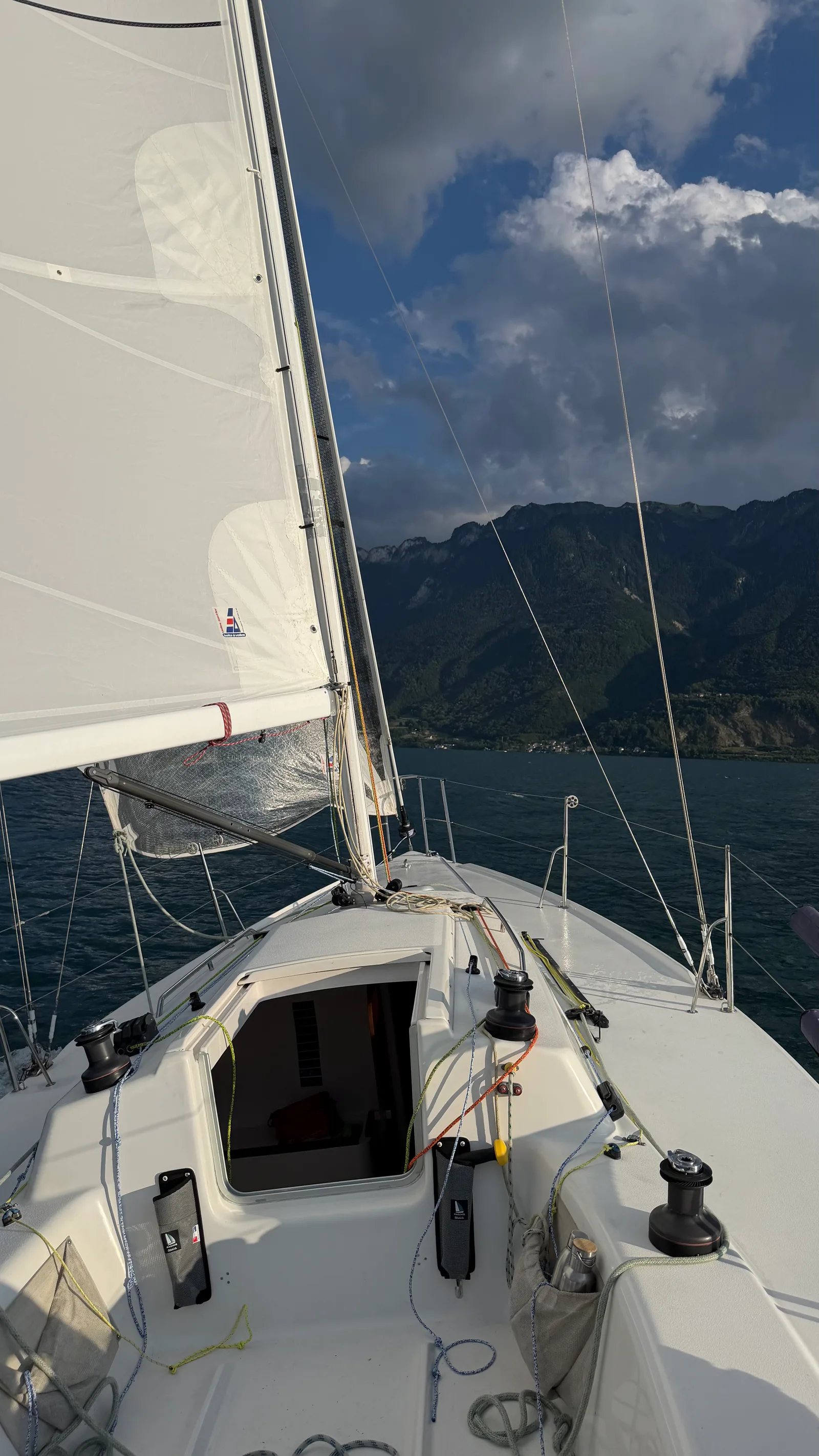
JAMAIS reaching on Lac Léman in front of the Prealps: new Marlow D2 Racing 8 mm halyards run through the Spinlock clutches, tails coiled on the coach roof

Colour logic: work-often vs leave-set

The halyards aren’t handled the same way, so they aren’t the same colour.
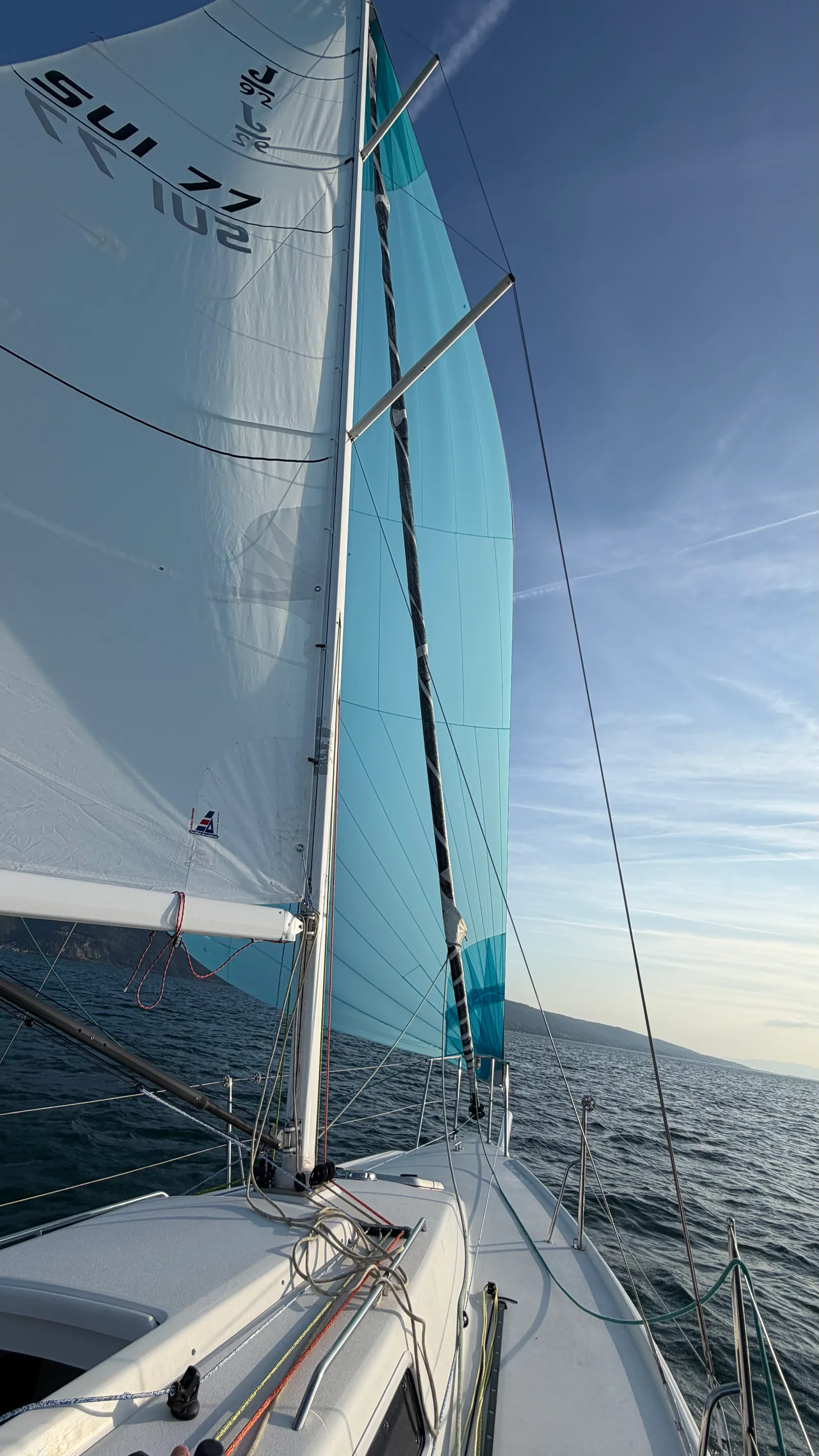
Blue gennaker hoisted on JAMAIS, orange Marlow D2 Racing 8 mm halyard under load, seen from the cockpit

  • Main and jib — same colour. With the furler, the jib halyard stays up: the sail rolls away rather than dropping, and the main halyard is set once at hoist. These are lines you leave alone under way, so a shared colour is fine.
  • Gennaker — orange. This is the halyard you actively work: hoisted and dropped at a mark rounding, often under pressure. A distinct colour lets the hand find the right line instantly, without reading.

Terminations you can’t lose

Textile wherever textile will do — lighter, and nothing metallic swinging to mark the deck or the mast.
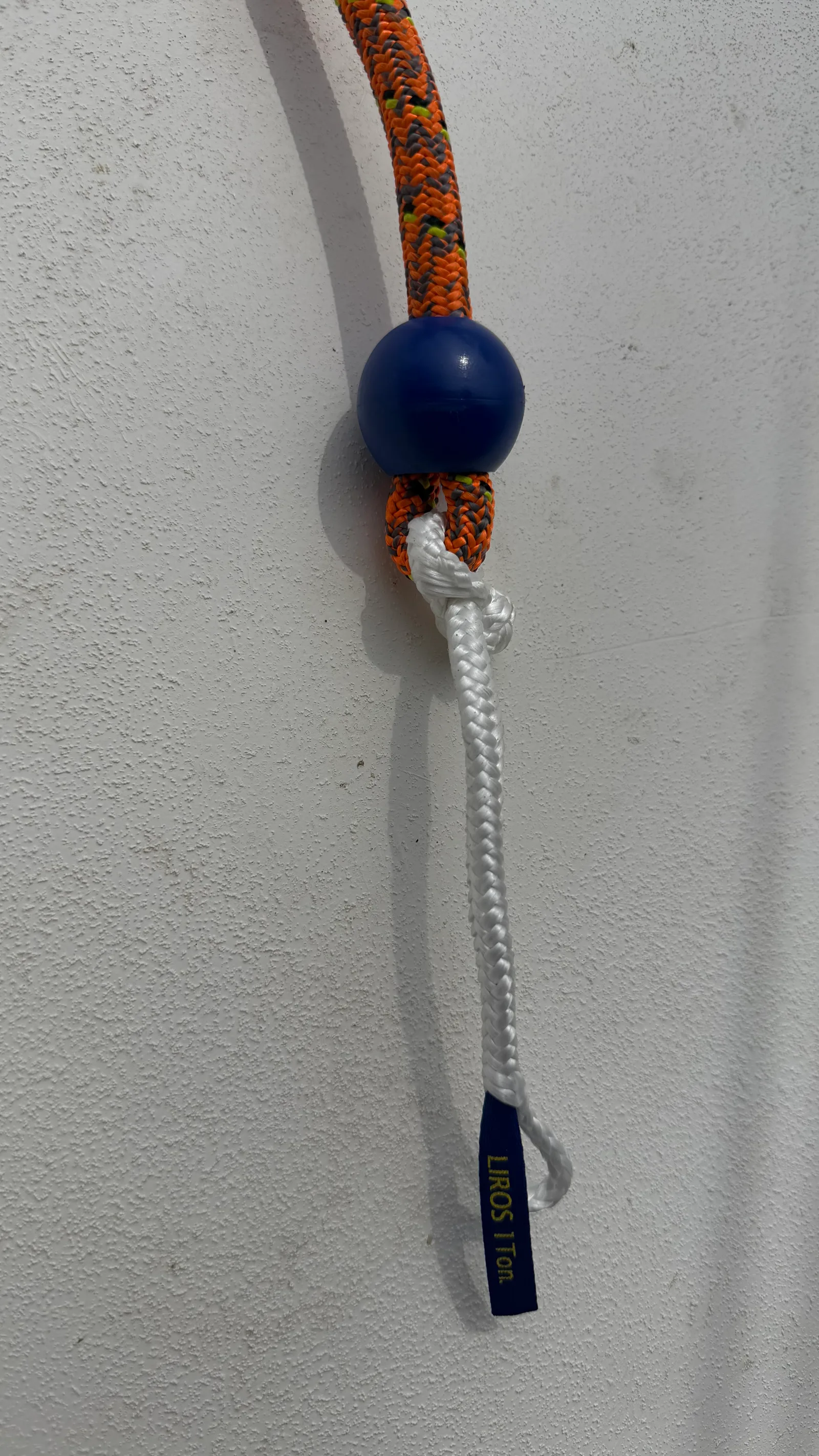
Liros 1 t soft shackle held captive in the splice of the orange gennaker halyard on a J/92s

  • Gennaker tack — a Wichard quick-release snap shackle, already aboard and reused. The quick-release matters: if the gennaker has to be depowered fast, the tack can be blown in one pull.
  • Gennaker halyard — a soft shackle. The one risk with a textile shackle is dropping it when it’s open. The fix: one end is passed around the halyard’s splice and back through the soft shackle itself, so it stays permanently captive — the weight saving of textile, without the risk of losing it overboard.

FAQ

What halyard diameter for a J/92s? 8 mm with a Dyneema core covers main, jib and gennaker. At ~3490 kg average break load it keeps a wide margin; the old 10–12 mm polyester was oversized just to fight stretch.

Why different colours? So the halyard you actively work — the gennaker — is identifiable at a glance, while the set-and-forget halyards share a colour.

Why a soft shackle you can’t drop? Passed around the splice and back through itself, it stays captive on the halyard: textile’s weight saving without losing it overboard.


This re-rigging is part of Jamais’s logbook. See also rig tuning and the cockpit and vang refit.

Cockpit of a J/92s reaching in front of the Lavaux vineyards, Spinlock XTS clutches and winch in the foreground
Rigging 5 min read

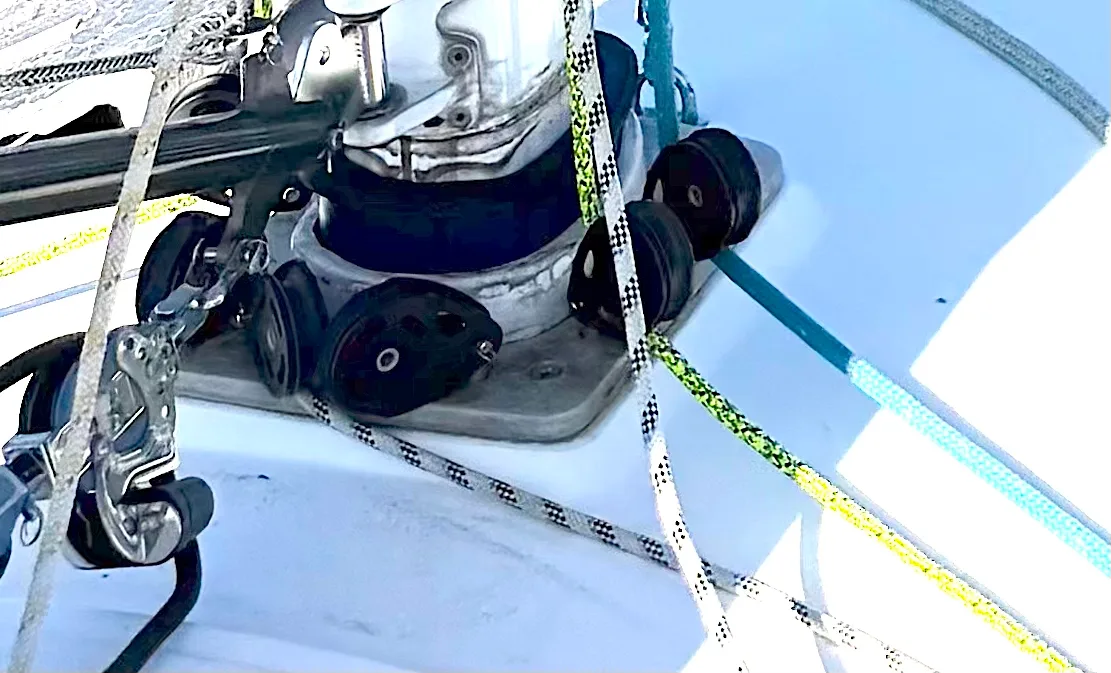
Refitting a J/92s cockpit: XTS clutches and a cascade vang

Rebuilding a J/92s cockpit: Spinlock XTS clutches and a Dyneema cascade vang for more power and a cleaner, more ergonomic deck layout.
Read next
Mast foot and deck partners of a J/92s with the rigid chock clearly lifted above the deck
Rigging 4 min read

Mast chock and tuning: bringing a J/92s back into trim

On a J/92s, a risen mast chock was a structural risk. Resetting it meant dropping all tension and redoing rake, centring and tensions.
Read next
Aft safety station of a J/92s set right: horseshoe buoy kit under cover on the stern rail, straightened stanchion and stern light on its re-welded plate
Systems 3 min read

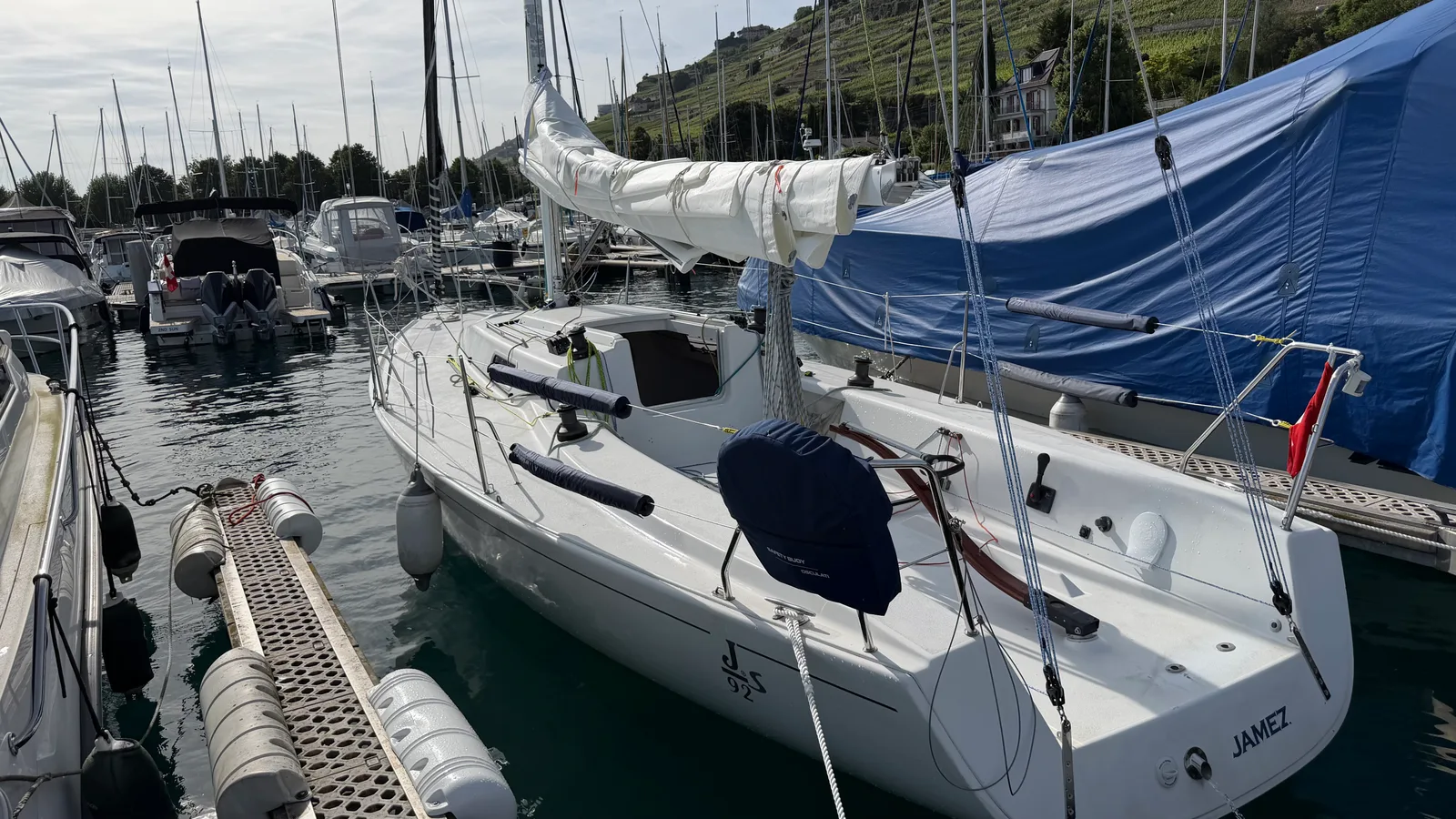
Stern safety refit: horseshoe buoy, stanchion and stern light

Restoring a J/92s stern safety station: an Osculati horseshoe buoy kit, a straightened stanchion, and a re-welded stern-light plate.

Read next

Ready to take your boat further? Let’s talk.

Order your parts, or let’s talk through your programme first.
Contact

Parlons de votre bateau.

Un projet, une pièce à commander, un programme à préparer. Décrivez votre besoin — réponse rapide à chaque demande.

Pièces & sourcing

Commander vos pièces.

Décrivez ce qu’il vous faut, on vérifie ensemble la bonne référence avant de commander.

  1. 01 Pièces
  2. 02 Livraison
  3. 03 Contact

Coaching & team building

Un programme à bord.

Coaching technique pour skipper ou programme de cohésion d’équipe à bord d’un J/92s de régate. Prestation sur devis — décrivez votre objectif et la date envisagée.

Type de programme