Systems 3 min read
Stern safety refit: horseshoe buoy, stanchion and stern light
Restoring a J/92s stern safety station: an Osculati horseshoe buoy kit, a straightened stanchion, and a re-welded stern-light plate.
Read next
Fitting an Osculati emergency ladder on a J/92s on Lake Geneva: why it's essential when sailing solo, and the FP4 reinforcement that stops it tearing a thin transom.
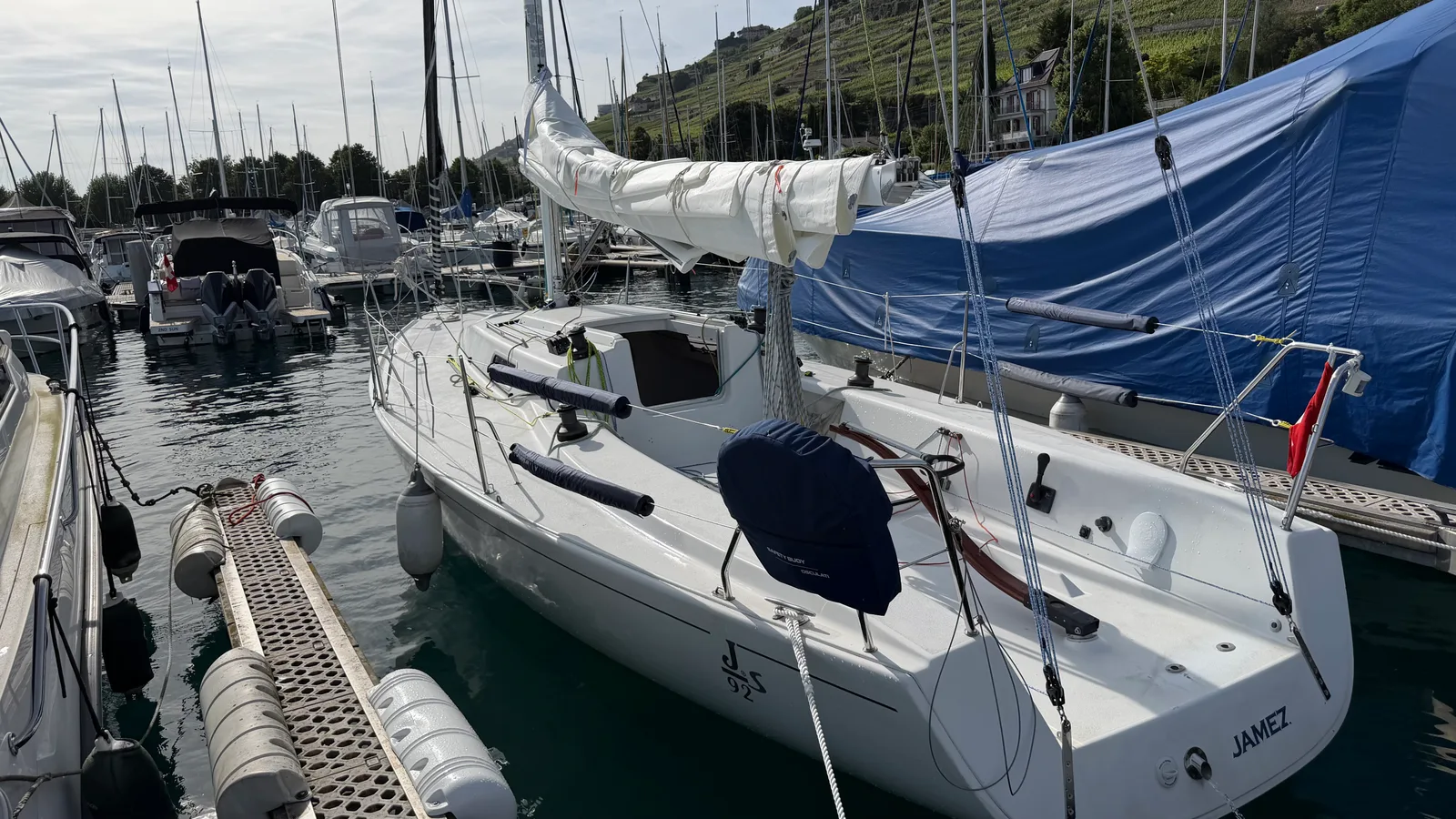
Falling in alone and not being able to climb back is the silliest and most serious accident at once. An emergency ladder answers exactly that: it deploys from the water, with no help and no electricity. On Jamais, a 2008 J/92s on Lake Geneva, fitting it was straightforward — it was the mount that took thinking.
The Osculati emergency ladder is a 3-step ladder in a watertight housing, fixed to the transom above the waterline. The principle is built for the person in the water: pull the ring, the lid opens, and the webbing ladder with rigid steps unrolls into the water. Nothing to operate from on deck, nothing that depends on the boat — precisely what you need when you’re the one who’s fallen.
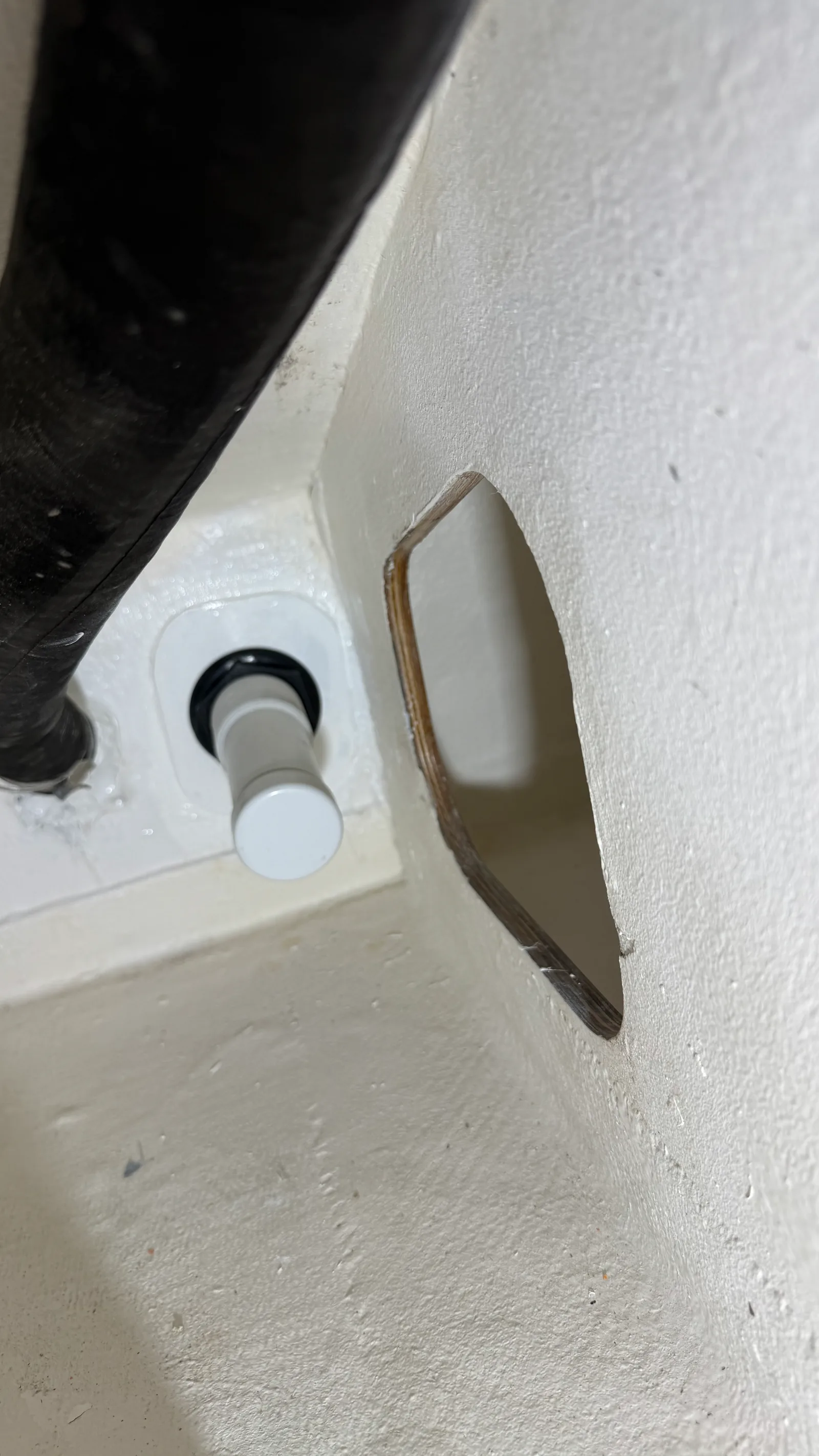
An emergency ladder is only as good as its anchoring. When it came to drilling, the finding was clear: at that spot the transom laminate is very thin. Yet that’s where the full weight of someone hauling themselves up pulls — sometimes heavy, sometimes panicking. Fixed as-is, the ladder risked tearing the transom over time rather than serving.
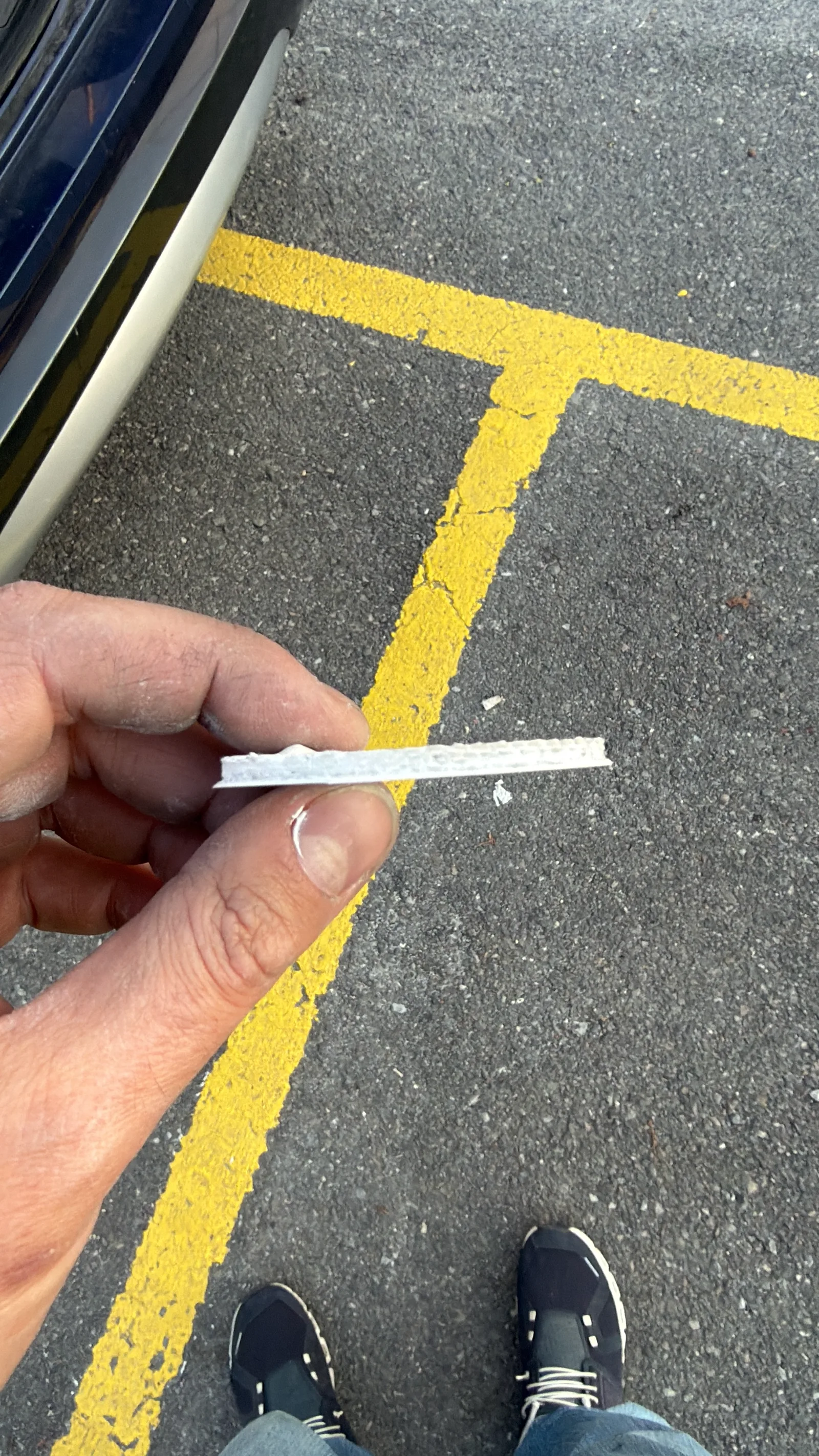
Hence the reinforcement: a 5 mm FP4 plate, bonded with epoxy behind the fixing point, to spread the pull load over a wide area instead of concentrating it on a few millimetres of laminate. The plate’s corners were rounded on purpose: a sharp corner creates a stress peak in the laminate — a radius spreads the load and avoids starting a crack. Once the FP4 was bonded, it was protected with a coat of spray gelcoat: a clean finish, and a barrier against moisture.
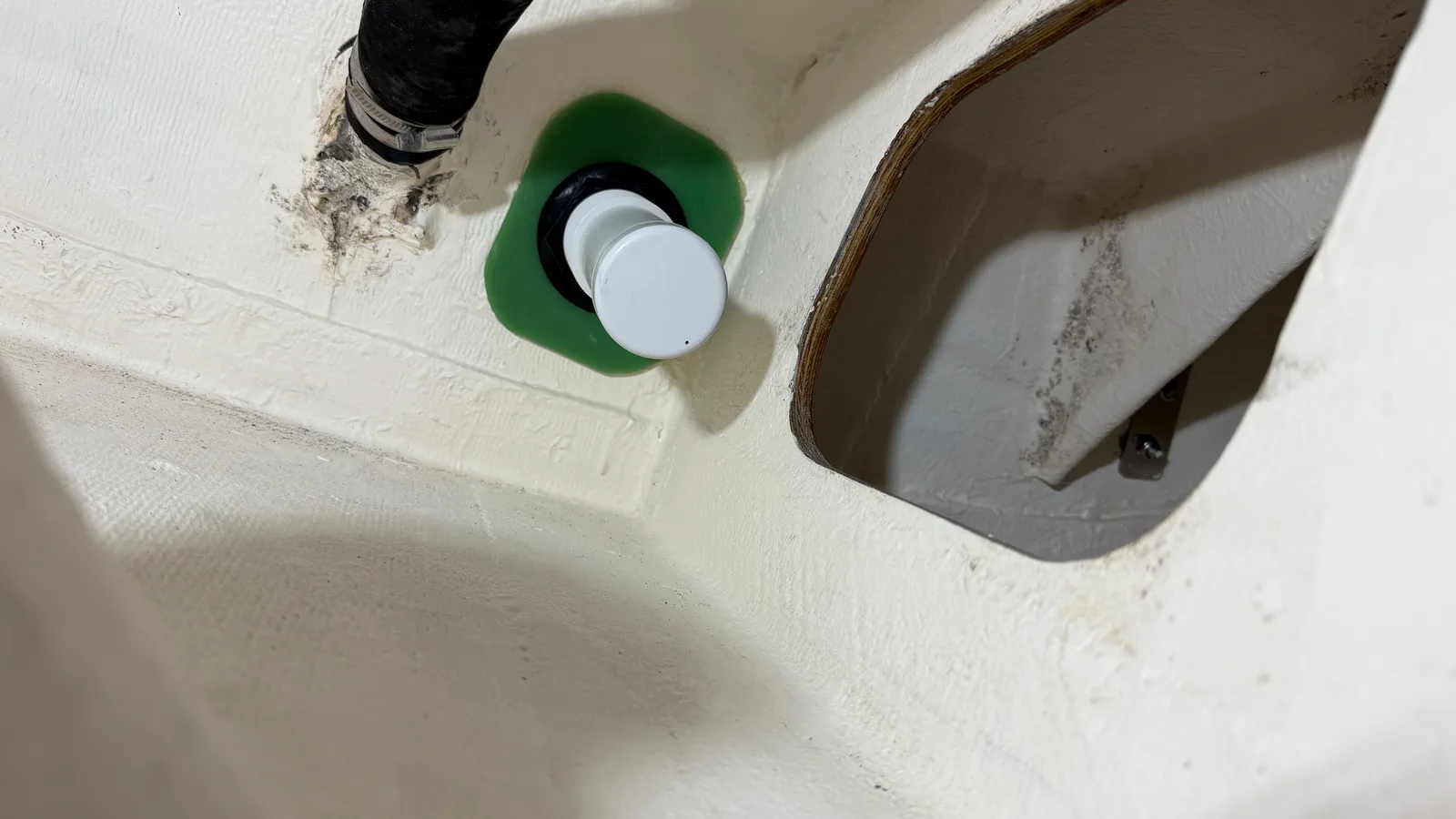
FP4 is a glass-fibre and epoxy laminate — rigid, water-insensitive, rot-proof; bonded with epoxy it becomes one body with the transom. Five millimetres are enough to turn a weak point into a sound anchor.
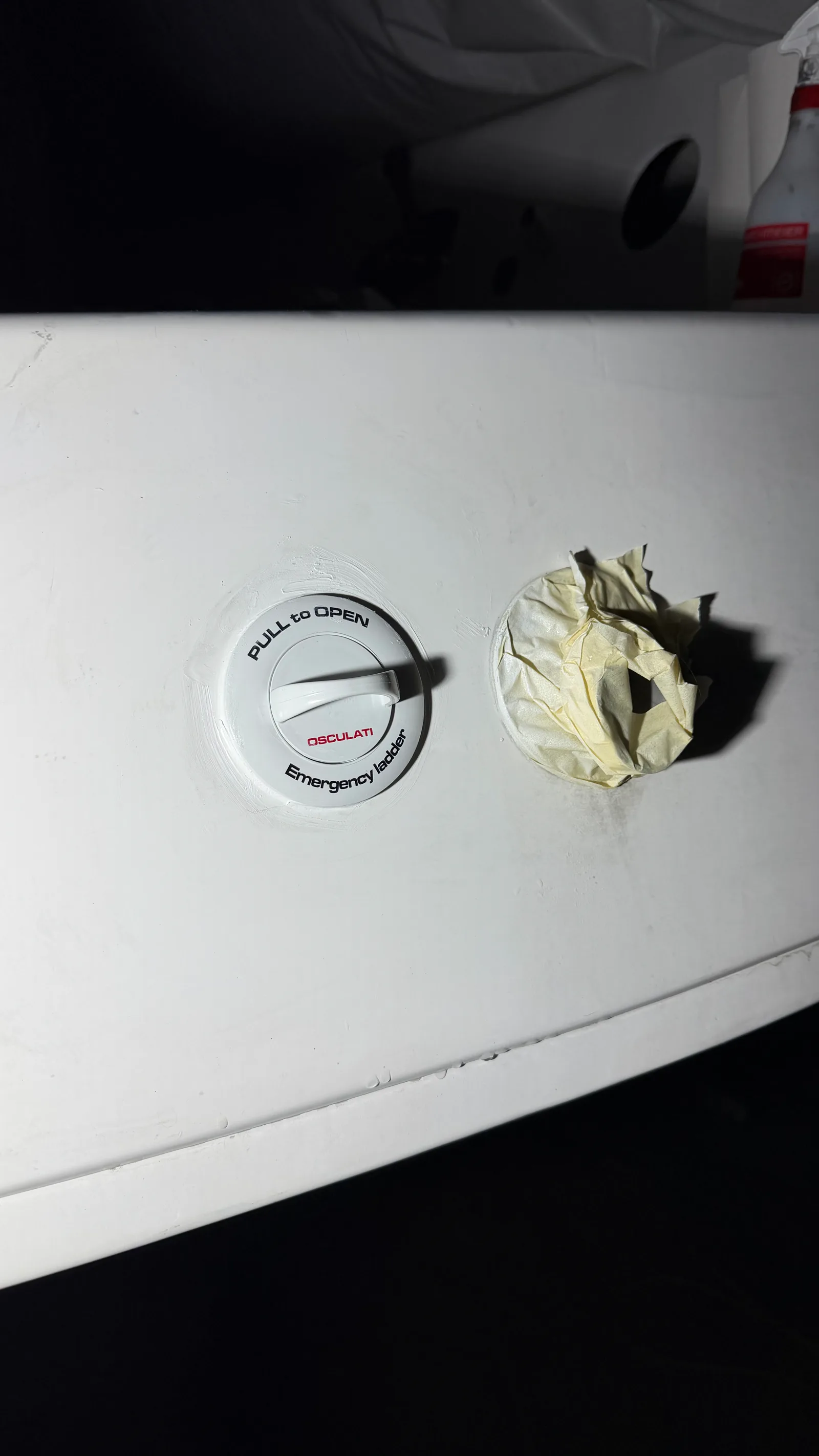
Here’s a part that costs under 100 francs — around 80. For that, anyone sailing solo secures the one piece of kit that gets them back aboard on their own after a fall. Weighed against what it prevents, the price question doesn’t even arise: it’s one of the rare safety buys where the cost/benefit has no counter-argument.
How is an emergency ladder different from a bathing ladder? A bathing ladder is worked from on deck; an emergency ladder deploys from the water, by the person who fell. That’s the difference between comfort and safety.
Why a reinforcement for a simple ladder? Because at the fixing point the transom laminate is thin, and someone hauling up applies a strong pull. An epoxy-bonded FP4 plate spreads the load and avoids tearing the transom.
Why round the corners of the backing plate? A sharp corner concentrates stress and can start a crack in the laminate. A rounded corner spreads the load.
Is it useful if I never sail alone? Yes, but it’s when solo that it becomes vital: no one else aboard to help you back up.
This job is part of Jamais’s logbook. See also the stern safety refit: horseshoe, stanchion and stern light.
Restoring a J/92s stern safety station: an Osculati horseshoe buoy kit, a straightened stanchion, and a re-welded stern-light plate.
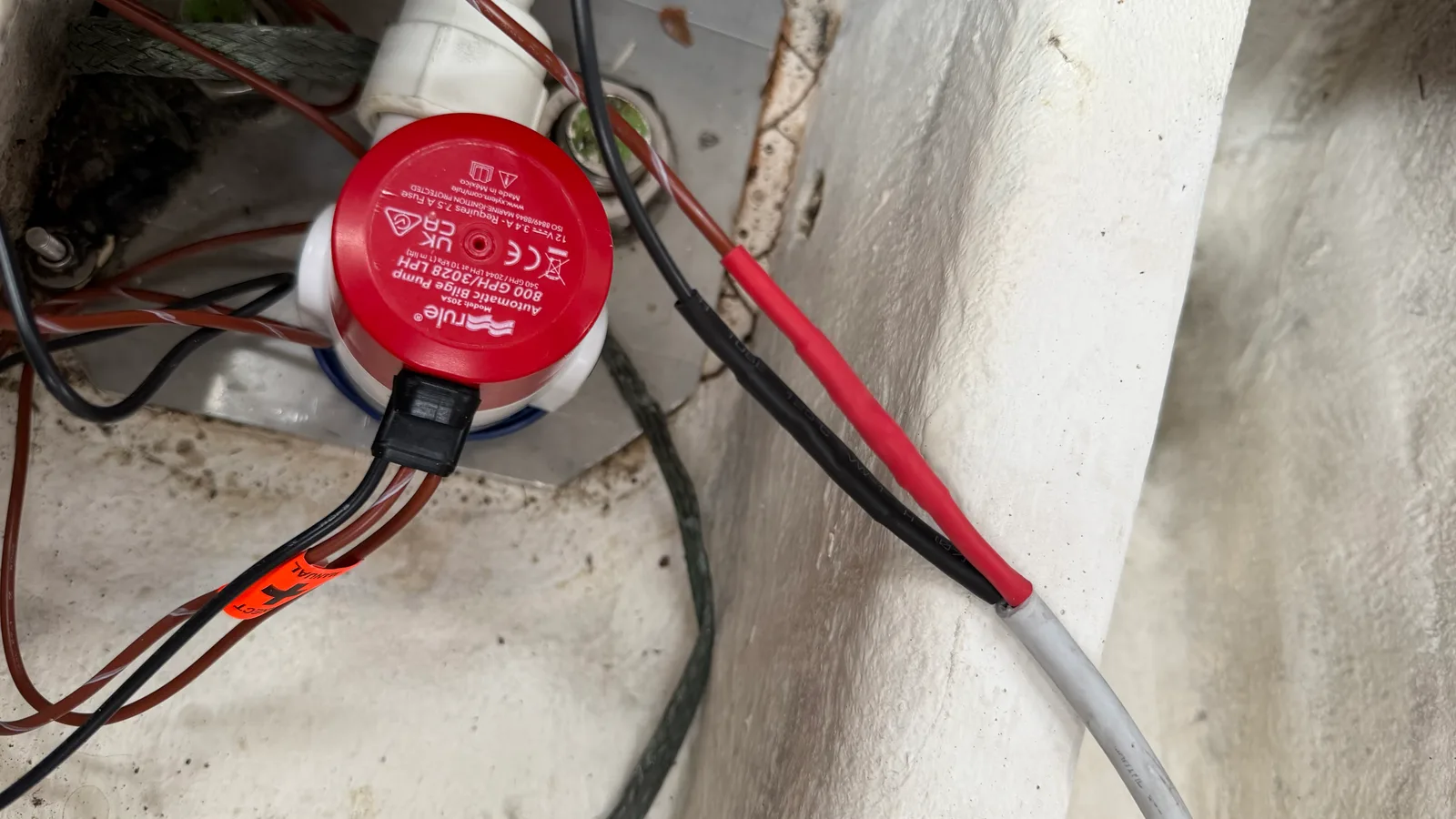
A manual and an automatic bilge pump on a J/92s: FP4 cockpit reinforcement, automatic float-switch operation, and a waterproof fuse holder.
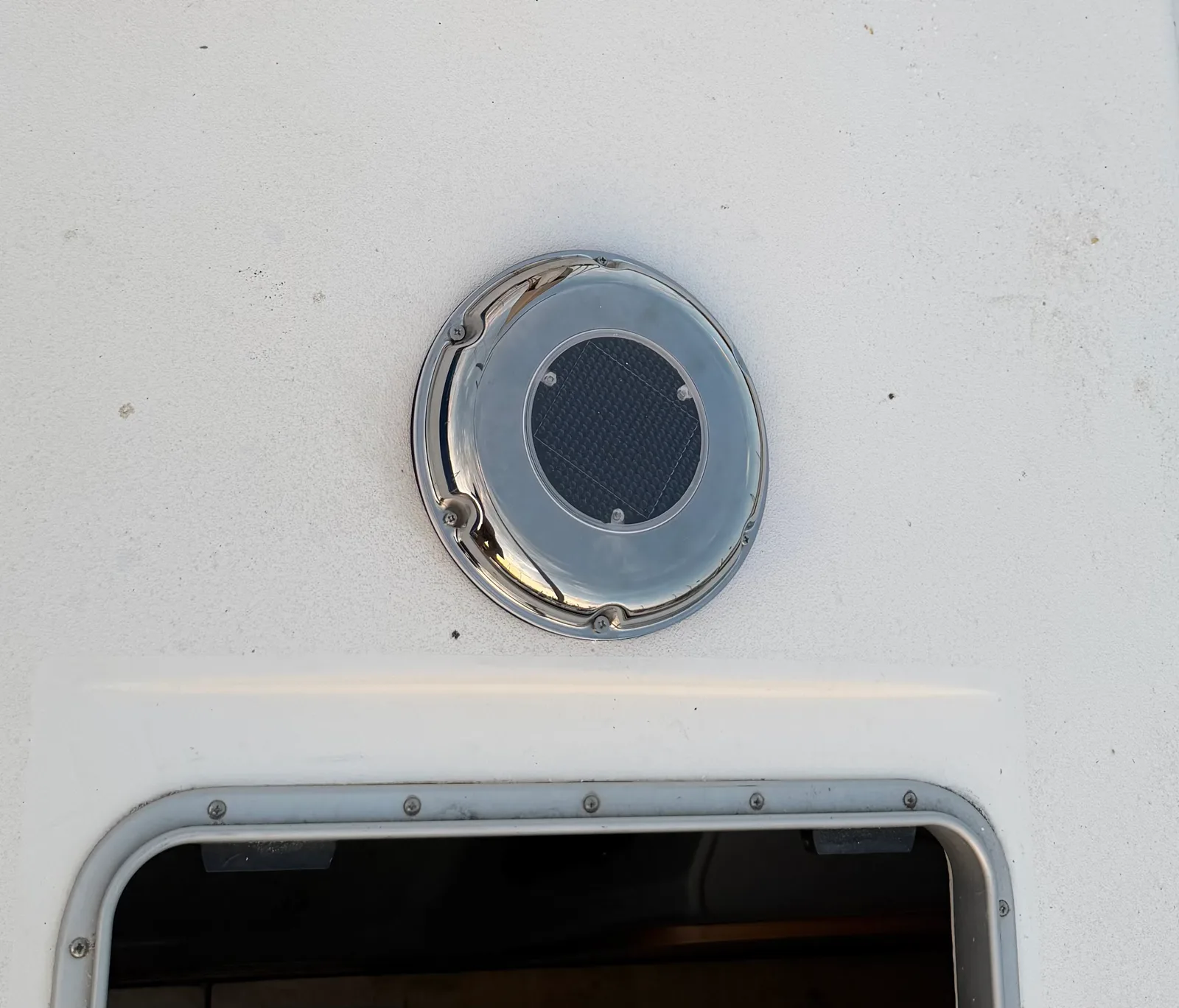
An autonomous solar vent on a J/92s: a low-to-high air circuit, 25 m³/h extraction with no drain on the batteries, and a mould-free interior.
Order your parts, or let’s talk through your programme first.